Midea Cube vs AEOCKY Dehumidifiers: Which Is Better? (October 2026)
For the Midea Cube vs AEOCKY dehumidifier choice, pick Midea for fewer bucket trips and app control, or AEOCKY for moving between rooms with gravity drainage. AEOCKY also claims about 40 dB operation.
On this page (12 sections)
- Midea Cube vs AEOCKY dehumidifier: which should you buy?
- How much difference does the water tank make?
- How should you plan continuous drainage?
- Will either model cover your whole basement?
- Which makes more sense for a bedroom or office?
- Which controls will help you day to day?
- How should you set up either dehumidifier?
- What changes in a cool basement?
- Which is easier to move and store?
- What care keeps either model useful?
- Which common buying mistakes should you avoid?
- Midea Cube vs AEOCKY dehumidifier: the final decision
For the Midea Cube vs AEOCKY dehumidifier choice, pick Midea if you'll collect water in a bucket, or AEOCKY if you have a gravity drain and want easier room-to-room moves. Midea adds remote app control, while AEOCKY gives a stated sound level for buyers planning around a bedroom or office.
Start with where the water will go, then consider room size, noise and storage. A dehumidifier that fits your daily routine is more useful than one chosen only for its largest coverage claim.


Midea Cube vs AEOCKY dehumidifier: which should you buy?
Midea suits a fixed location with manual emptying; AEOCKY suits a drain-equipped space where mobility matters. Neither is the right choice solely because both carry a 50-pint daily capacity claim.
Think through a normal week before choosing. Will you visit the basement each day, move the appliance into an office, or leave it connected to a drain for long periods?
Midea's larger bucket buys more time between trips, but someone still has to carry the water. AEOCKY's lighter body helps with moving the appliance, while its smaller bucket makes a drain more valuable during sustained use.
Who should choose Midea Cube over AEOCKY?
Choose the Cube if bucket emptying is your main constraint and you can handle the water safely. It also suits buyers who want to check humidity and water level through an app instead of walking downstairs.
Skip it if frequent stair carries are part of your plan. Its storage design helps when you put it away, but it doesn't make a heavier appliance easier to lift.
Who should choose AEOCKY over Midea Cube?
Choose AEOCKY if you can arrange gravity drainage and want to shift the unit between living spaces. Its handle and casters make that routine more practical on suitable floors.
Skip it if you have no drain and want long stretches between bucket checks in a very damp room. Also choose another setup if your only water outlet is uphill and you need a built-in pump.
How much difference does the water tank make?
Midea's 4.2-gallon tank holds over 5 times as much water as AEOCKY's 0.8-gallon tank. That changes the emptying routine, not how much moisture the appliance can remove from the air in a day.
At an equal collection rate, the larger bucket allows a longer interval between trips. In practice, that interval changes as humidity falls, doors open or damp weather brings more moisture indoors.
A useful category rule is that 1 gallon of water weighs about 8.3 lb. A full Midea bucket can therefore contain about 35 lb of water before you count the bucket itself.
You don't need to wait until it fills. Emptying earlier can be the better choice if the route includes stairs, tight turns or a high sink.
For perspective, 50 pints equals 6.25 gallons. At that claimed daily output, either bucket would need emptying within a day, so even the larger tank doesn't replace a drain for sustained unattended use.
How should you plan continuous drainage?
Choose your drain location before choosing your appliance location. Both include a hose, but gravity drainage needs a suitable outlet below the water discharge point and a clear downhill route.
AEOCKY includes a 2 m hose and a garden hose adapter. Its tank must remain installed during drainage, so leave access to the bucket as well as the hose connection.
Midea offers a no-bucket drain arrangement. Follow its instructions for supporting the unit above a suitable drain, keeping the appliance stable and securing the hose.
A hose running across the floor can create a trip hazard, especially in a bedroom or shared basement. Route it away from walkways without crushing it under furniture or closing a door on it.
Avoid loops, kinks and uphill stretches that can trap water. After setup, stay nearby until you confirm water reaches the drain and no joints leak.
If your only outlet is a sink above floor level, don't assume an included hose can lift water into it. Choose an approved arrangement for that location rather than balancing the appliance on improvised supports.
Will either model cover your whole basement?
Size for the damp area and its airflow, not the entire home's floor plan. Midea claims coverage up to 4,500 sq ft, while AEOCKY claims up to 3,500 sq ft, but walls and closed doors can limit how much air reaches either unit.
A mostly open basement is different from several bedrooms connected by a narrow hallway. One appliance in the hall may lower nearby humidity while a closed room stays damp.
Moisture load matters too. A space with wet walls, frequent outdoor air entry or damp laundry needs more drying than an equally large room with mild seasonal humidity.
AEOCKY specifies 50 pints per day at 95°F and 95% relative humidity, and 38 pints at 86°F and 80% relative humidity. Midea's 50-pint claim here doesn't include matching conditions, so those figures don't establish equal output.
Use our dehumidifier size guide to narrow the capacity you need. For other room types and appliance options, the home dehumidifier guide gives a broader starting point.
Neither appliance should be your first response to a plumbing leak or water entering through a wall. Stop the source of liquid water, then use dehumidification to help control the remaining dampness.
Which makes more sense for a bedroom or office?
AEOCKY is the stronger fit when a published sound figure matters, with the brand claiming about 40 dB at its highest dehumidification setting. That supports considering it for occupied rooms, but doesn't prove it is quieter than Midea under the same conditions.
Compressor sound, fan noise and vibration can affect comfort differently. A steady fan may be easy to ignore during work, while compressor starts may stand out in a quiet bedroom.
Place either unit on a level, firm surface and keep its body from touching furniture. Don't put it inside a cabinet or block airflow in an attempt to muffle the sound.
Distance from your bed or desk can matter as much as the appliance's location within the room. Our quiet dehumidifier guide explains other useful choices for noise-sensitive spaces.
If overnight operation bothers you, try drying the room before bedtime and watch how quickly humidity returns. That approach works only if daytime use keeps the room within your chosen range.
Which controls will help you day to day?
Midea offers remote access; AEOCKY favors controls you use at the appliance. Choose based on how you'll check and adjust the room, rather than collecting features you won't use.
The Cube connects to the SmartHome app on iOS or Android and works with Alexa and Google Assistant. App monitoring is useful for a basement you don't visit often, though it doesn't replace checking the drain and bucket physically.
AEOCKY offers a 40%–80% humidity setting range, a 24-hour auto-on/off timer, fan speed control and a child lock. Its color humidity light provides a quick visual cue and can be turned off.
Midea's humidity adjustment range is 35%–85%. For most household use, the useful question is whether the room holds a sensible target, rather than which model offers the lowest possible setting.
Start around 45%–50% relative humidity and adjust for the space. Our guide to a good humidity level for a basement explains how to choose a target without trying to make the room needlessly dry.
How should you set up either dehumidifier?
Give the appliance clear airflow, a level base and a safe water route. Before first use, follow the manual's unpacking and upright waiting instructions, especially if the unit traveled on its side.
Measure both the appliance space and the room needed to remove its bucket. An appliance can fit between furniture yet still be awkward to empty or clean.
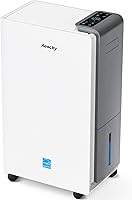
AEOCKY measures 13.19 in deep, 17.99 in wide and 8.66 in high. The Cube's supplied dimensions are 14.45 in deep, 14.76 in wide and 14.96 in high, but allow for its chosen operating form and the manual's clearances.
Keep air inlets and outlets clear of curtains, boxes and laundry. Use a suitable wall outlet according to the manual, and keep electrical connections away from the water route.
Close exterior windows and doors while drying the room. Otherwise, humid outdoor air can keep replacing the moisture you're removing.
Use a separate hygrometer away from the discharge air to follow the room's trend. Check after normal use over the next day or two rather than changing the target every few minutes.
What changes in a cool basement?
Expect slower moisture removal as the room gets cooler. AEOCKY has automatic defrost, which manages normal frost buildup but doesn't make cold-room collection equal to warm-room output.
Defrost periods can interrupt active water removal. A lower bucket level during cooler weather can therefore reflect conditions rather than a fault.
Check the manual's operating temperature limits before choosing either model for an unheated space. Don't use the daily capacity claim as evidence that an appliance suits every winter basement.
Keep tracking humidity alongside temperature. If the room is already within your target range, less collected water is often the result you want.
Which is easier to move and store?
AEOCKY is easier to move; Midea offers a useful nested storage form. AEOCKY weighs 25.3 lb, compared with the Cube's 41.5 lb, before collected water adds to the task.
Casters help across smooth floors, but stairs and thick carpet still require planning. Empty the bucket, turn off the appliance and disconnect its drain hose before moving it.
Midea's lift-and-twist design lets you nest it for storage or extend it for the larger bucket arrangement. Use the manual to choose the correct setup rather than assuming every form works the same way.
For seasonal storage, clean and dry the bucket and follow the appliance's drying instructions. Leave enough time for moisture to dry before putting the unit away.
What care keeps either model useful?
Keep the filter, bucket and drain path clean. Restricted airflow and a dirty water route can undermine an otherwise suitable setup.
Follow the manual's filter schedule, with more frequent checks in dusty basements or rooms with pet hair. Turn off and unplug the appliance before cleaning, and let washable parts dry as directed before refitting them.
Wash the bucket even when continuous drainage means you rarely empty it. Inspect the hose for slime, blocked ends and sections that have shifted uphill.
Our dehumidifier cleaning guide covers the filter, coils and bucket. Use only the cleaning methods allowed for your appliance, and don't spray water into electrical parts.
AEOCKY provides a 3-year machine warranty. Keep the receipt and warranty details accessible, but choose your setup around daily use rather than a promise of future service.
Which common buying mistakes should you avoid?
Don't confuse daily extraction capacity, bucket size and coverage. They answer different questions: how much water can be removed under stated conditions, how much can be stored, and how large a space the brand claims.
Don't choose Midea's larger bucket if carrying it would make you avoid emptying it. Plan smaller loads or continuous drainage before that becomes a daily burden.
Don't choose AEOCKY for an inaccessible room without checking the drain route. A small tank loses much of its convenience if someone must keep returning to empty it.
Don't set either appliance to its lowest humidity target by default. A lower target can extend running time without making the space more comfortable.
Don't assume a higher floor-area claim proves faster drying. If these options don't fit your routine, Midea Cube vs Waykar and Midea vs Frigidaire dehumidifiers offer other comparisons.
Midea Cube vs AEOCKY dehumidifier: the final decision
Buy Midea for bucket-based use and remote control; buy AEOCKY for a drain-equipped room and easier moves. If carrying water is difficult and no downhill drain is available, solve that problem before choosing either model.
AEOCKY makes the most sense when you can leave its hose connected in the room that needs drying. For occasional moves, empty and disconnect it first rather than rolling it with water inside.
Midea makes the most sense when it stays in one place and the bucket route is manageable. Its extra storage helps busy households, but you should still plan regular physical checks.
Before ordering, mark out the appliance space, trace the water route and decide who will empty the bucket. Then read the Midea Cube 50 Pint review or AEOCKY dehumidifier review for the model that fits that plan.
Frequently asked questions
Is the Midea Cube or AEOCKY better for a basement?
Choose Midea for a basement without a convenient drain, provided you can safely empty its larger bucket. Choose AEOCKY when gravity drainage is available and you expect to move the unit occasionally.
For either model, base sizing on dampness, temperature and airflow between rooms rather than floor area alone.
Which dehumidifier has the bigger water tank?
The Midea Cube has a 4.2-gallon tank, compared with AEOCKY's 0.8-gallon tank. The larger bucket gives you more room between emptying trips, but it also holds more water weight.
You can empty it before it fills if carrying a full bucket would be difficult.
Can either model drain continuously?
Both models include a drain hose and support continuous drainage. Midea offers a no-bucket setup, while AEOCKY requires its tank to remain installed.
Plan a downhill hose route to a suitable drain, secure the outlet and follow the manual for the chosen arrangement before leaving either unit running.
Which dehumidifier is quieter?
AEOCKY claims about 40 dB at its highest dehumidification setting, making it worth considering for a bedroom or office. There isn't a comparable Midea sound measurement here to establish a winner.
Placement, vibration and distance from your bed or desk also affect how noticeable either unit will be.
Do both models remove 50 pints a day?
Both have a 50-pint daily capacity claim, but actual collection changes with temperature and humidity. AEOCKY specifies 50 pints at 95°F and 95% relative humidity, or 38 pints at 86°F and 80% relative humidity.
Expect less water as a room dries rather than treating lower collection alone as a fault.