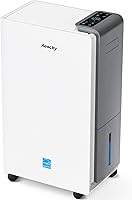
Best Dehumidifiers for Home: A Size-and-Room Guide
The best dehumidifier for most persistently damp rooms is a compressor model with humidity control and a practical drain route. Choose AEOCKY for regular use in a large damp space, BEDRED for light moisture in a small room, KNKA for flexible controls, or avylo for upward drainage.
On this page (10 sections)
- How do you choose the best dehumidifier for your home?
- What do pint ratings and coverage figures mean?
- Which dehumidifier type fits your room?
- Which home dehumidifiers match different needs?
- When is a pump or drain hose worth it?
- How should you set up a dehumidifier for the first week?
- What room conditions can change your choice?
- How do you keep a dehumidifier working well?
- Which common mistakes waste time or electricity?
- Which best dehumidifier choice should you make?
The best dehumidifier for a persistently damp home area is a compressor model with adjustable humidity control and drainage you can manage every day. Among these options, AEOCKY fits regular use in a large damp space, while avylo suits a drain that requires pumping upward.
BEDRED serves a different need: light moisture in a small, enclosed room where a compact body matters. KNKA is another large-room choice, with flexible humidity settings and controls suited to daily use.
Start with the room and the water route, then compare capacity. A large coverage claim, a large bucket and a high daily pint figure describe different things.
How do you choose the best dehumidifier for your home?
Choose by matching moisture load, room conditions and drainage before comparing convenience features. The right unit should keep the area near your target humidity without demanding more emptying or floor space than you can manage.
Begin in the dampest area you want to control. Measure that space rather than using your whole home's floor area if doors, stairs or walls limit airflow.
Next, check humidity over several days with a separate hygrometer. Note whether moisture rises after rain, showers, laundry or warm weather, because those patterns help identify what the appliance needs to handle.
| Your situation | Start with | Main buying check |
|---|---|---|
| A basement stays humid for much of the day | A compressor dehumidifier | Capacity under comparable conditions and a reliable drain route |
| A small enclosed room has mild moisture | A compact thermoelectric unit may fit | Whether humidity actually falls enough during use |
| The drain is above the appliance | A compressor model with a pump | Vertical lift and the full hose route |
| A bedroom needs regular moisture removal | A unit sized for its moisture load | Sound, lights and placement away from the bed |
| Several rooms are separated by closed doors | A plan for each damp zone | Whether air can reach the dehumidifier |
| Water enters after rain or through plumbing | Repair the source first | What humidity control is needed after repairs |
A strong unit in a hallway cannot draw much moisture through a closed bedroom door. Likewise, moving one unit between floors leaves each space without active moisture control for part of the day.
For a room calculation, read what size dehumidifier you need. Our guide to how to choose a dehumidifier explains how capacity, type and drainage work together.
What do pint ratings and coverage figures mean?
A daily pint figure describes water removal under stated temperature and humidity conditions, while tank capacity describes how much water the bucket holds. Compare these separately so a large tank does not get mistaken for a powerful appliance.
Warm, humid air generally lets a compressor dehumidifier collect more water than cooler, drier air. The maximum daily figure is therefore a reference point, not an amount you should expect every day.
Compare daily removal under matching conditions
AEOCKY and KNKA each rate their models at up to 80 pints per day at 95°F and 95% relative humidity. Both also give a lower figure of 56 pints per day at 86°F and 80% relative humidity.
avylo's maximum is 90 pints per day at 90°F and 90% relative humidity. Those conditions differ, so the larger number does not establish a clear performance lead over the other compressor models.
Do not turn a maximum removal figure into an emptying schedule. Actual collection changes with the room, and a unit maintaining an already dry space may gather much less water than during its first days.
Use coverage as a rough filter
AEOCKY and KNKA advertise coverage up to 5,500 sq ft. That can help narrow a search, but it does not account for your ceiling height, room layout, air movement or moisture entering the building.
BEDRED advertises 1,000 sq ft coverage, yet no daily removal figure is provided here. Choose it for light moisture in a small enclosed space, rather than using that area claim to size a damp basement.
Separate bucket size from drying ability
A bigger bucket reduces trips to empty water when collection is the same. It does not increase the amount of moisture the appliance can pull from the air.
This matters most when you cannot use a hose. A unit that fills its bucket and shuts off while you are away leaves humidity uncontrolled until someone empties it.
Which dehumidifier type fits your room?
A compressor model is the stronger starting point for persistent dampness, while a thermoelectric model suits lighter moisture in a limited space. Adding a pump changes how collected water leaves the appliance, not which rooms its air can reach.
Compressor units for ongoing dampness
Compressor dehumidifiers draw air across cold coils, where moisture condenses into water. They suit rooms that need substantial daily moisture removal, including many basements and laundry areas.
They also release heat into the room. If your main problem is being too warm, remember that a dehumidifier controls humidity without providing the cooling of an air conditioner.
Cool conditions need closer attention because frost can form on the coils. Defrost controls help manage this, but you should still check the supported operating temperature for the exact model.
Thermoelectric units for modest moisture
Thermoelectric dehumidifiers use an electric cooling system instead of a compressor. Their compact size can make them easier to place, but they are a different choice from a high-capacity room dehumidifier.
Use one where moisture is mild and you can check the result with a hygrometer. If humidity stays high, collecting a little water is not enough reason to keep relying on it.
Pump models for difficult drain routes
A built-in pump is useful when water needs to rise to a drain above the unit. It can make a basement setup more practical when a nearby floor drain is unavailable.
It does not remove the need to inspect the hose. A loose outlet, kinked line or unsuitable drain can turn a convenient setup into a spill.
Which home dehumidifiers match different needs?
Choose AEOCKY for regular large-room use, BEDRED for light moisture, KNKA for flexible controls, or avylo for upward drainage. Each solves a different buying problem, so start with the role rather than the biggest number.
PocketVerdict compared their stated capacity conditions, controls and drainage features. The recommendations below focus on how those details affect placement and routine use.
AEOCKY 80 Pint Dehumidifier: best dehumidifier choice for regular large-room use
AEOCKY suits a large damp area where you want humidity control and a hose route for ongoing use. AEOCKY identifies the RHEA-001 as ENERGY STAR Most Efficient 2025, making it worth considering when the unit will run frequently.
The included garden hose adapter adds a drainage connection option. Auto, constant humidity, continuous, smart drying and sleep modes let you choose between maintaining a target and handling a temporary moisture load.
For regular room use, start with humidity control rather than leaving continuous mode on by default. Once the room reaches your target, there is little reason to keep pushing it drier.
AEOCKY reports 44 dB at the lowest fan setting and includes defrost sensors. That sound figure helps with planning, but a quiet fan setting can still be noticeable beside a bed or in a room with hard floors.
The body measures 14.45 in deep, 8.66 in wide and 24.09 in high. Measure the intended spot with extra room for airflow, the hose and access to the tank.
Choose it if the room has ongoing dampness and you can give the appliance a stable place to run. Its range of modes is useful when the same space has both routine humidity and occasional heavier loads.
Skip it if you need built-in upward pumping or only have a tight shelf for a small appliance. Do not choose it for an unheated room until you confirm that room falls within its supported operating range.
BEDRED 95 oz Dehumidifier: for light moisture in a small room
BEDRED suits a small enclosed room with mild humidity where a compact appliance is easier to accommodate. Its 95 oz figure is bucket capacity, so use room humidity, rather than bucket size, to judge whether it meets your needs.
It measures 6.7 in deep, 8.7 in wide and 14.6 in high, and weighs 5.8 lb. That makes it easier to move than the larger compressor options here, though it still needs a level surface and clear airflow.
Sleep mode turns off the ambient lights, while the separate 7-color light feature offers a visible glow when wanted. Automatic shutoff stops operation when the tank is full.
Choose it if the moisture problem is modest, you can empty the tank yourself and you will check whether humidity improves. A lightly humid small bedroom is a more sensible use than a basement with persistent condensation.
Skip it if walls stay wet, the room smells persistently musty or you need substantial daily removal. Those conditions call for checking the moisture source and choosing a unit with capacity matched to the load.
In a bathroom, use exhaust ventilation to remove shower moisture at its source. Keep any portable electrical appliance away from splash zones and follow its placement instructions.
KNKA 80 Pint Dehumidifier: for shared spaces and flexible controls
KNKA suits a large room where several people may use the controls and you want a clear humidity display. Its casters, cord storage and washable filter also support routine moving and upkeep.
KNKA says the model is ENERGY STAR certified. It offers auto mode with a default target of 50% relative humidity, dry mode for clothes drying, and a setting mode adjustable from 30% to 80%.
The included hose is 6.56 ft long. Measure the downhill route before choosing its location, since a nearby drain may still require more hose than the straight-line distance suggests.
An optional genuine KNKA external tank holds 2.64 gallons and is sold separately. That is useful when a drain is unavailable and you want more collection space, provided you can comfortably handle the extra water.
KNKA reports 40–45 dB operation, and its display and indicator lights can be turned off. The child lock helps prevent accidental changes, while the 12-hour timer can limit a planned run.
Choose it if adjustable controls and daily handling matter as much as capacity. A shared living space or laundry area is a good match for those features.
Skip it if you need a built-in pump or cannot provide a safe downhill drain route and do not want to empty a tank. Before first use, KNKA instructs you to leave the unit upright for 24 hours.
avylo 90 Pint Pump Dehumidifier: for drains above the floor
avylo suits a damp room where the drain is above the appliance and gravity drainage will not work. Its built-in pump is the deciding feature here, rather than its higher maximum pint figure.
The top-mounted tank holds 2.11 gallons and has a full-tank reminder and automatic shutoff. You can choose tank collection, gravity drainage or pumping, depending on the room.
avylo instructs you to empty the tank before setting up drainage. In gravity or pump use, water bypasses the tank and flows through the hose; a floor-drain pipe is not included.
The model weighs 38.6 lb, so plan a stable location rather than treating it as an appliance to carry between floors. Leave access to the top-mounted tank and drainage connections.
avylo reports sound as low as 41 dB and provides controls to turn off key sounds and lights. It also includes a 24-hour timer, and avylo identifies it as ENERGY STAR Most Efficient 2025.
Choose it if upward drainage is essential and the measured route fits its pump instructions. This can save the recurring work of carrying collected water out of a basement.
Skip it if a simple downhill hose already solves drainage and you do not need a pump. Also skip it if the route exceeds the supported lift or needs a longer hose than the approved setup allows.
When is a pump or drain hose worth it?
Use continuous drainage for ongoing moisture when a suitable drain is available. Choose gravity drainage for a downhill route and a pump when water must rise.
Choose a tank when access is easy
Tank collection works when you are nearby and can comfortably empty the water. It also avoids running a hose across a room used by children, pets or other household members.
Check the tank more often during the first few days. The initial moisture load may be greater than the amount collected once the room settles near its target.
Choose gravity drainage for a clear downhill path
A gravity hose needs a continuous downward path without raised sections, kinks or a blocked outlet. Lay out the route before buying rather than assuming any nearby drain will work.
Do not put a heavy appliance on improvised furniture to create extra height. Use a placement allowed by the manufacturer, and keep the hose from becoming a trip hazard.
Choose a pump for vertical rise
Measure both the vertical rise and the total hose path. A hose that is long enough in a straight line may be too short once it follows walls and reaches a secure outlet.
Secure the discharge end and observe the first drainage cycles. Check connections afterward, especially if the appliance or hose gets moved.
Our guide to dehumidifiers with a pump helps compare setups where water cannot drain downhill.
How should you set up a dehumidifier for the first week?
Start with clear airflow, closed windows and a moderate humidity target, then watch how the room responds. Good setup makes it easier to distinguish a placement problem from a capacity problem.
- Prepare the appliance. Follow unpacking and upright-rest instructions before switching it on, especially after transport.
- Choose a level spot. Leave the clearances required by the manual and keep curtains, furniture and stored boxes away from the intake and outlet.
- Connect power as directed. Follow the electrical instructions and keep cords and connections away from water.
- Set up water collection. Seat the bucket correctly or connect the approved hose, then check for leaks during operation.
- Start near 50% relative humidity. Adjust after observing the room instead of choosing the lowest available setting.
- Track the occupied area. Put a separate hygrometer away from the exhaust, direct sunlight and obvious moisture sources.
Close outside doors and windows while it runs. Leave interior doors open only to spaces you intend the appliance to serve, since adding more rooms increases the load.
Initial drying includes moisture held in furnishings and building materials as well as water in the air. Judge progress over several days rather than expecting the entire space to settle after a short run.
Compare readings at similar times and conditions. A humidity rise during laundry or after heavy rain can reveal a recurring load that needs attention beyond the appliance.
If humidity stays high, check the bucket, hose, airflow and filter first. Then look at temperature, room layout and continuing water entry before deciding that you need a larger unit.
What room conditions can change your choice?
Temperature, airflow and the moisture source can change which unit fits, even when two rooms have the same floor area. Match the appliance to the conditions it will face for most of its use.
Cool basements and garages
Cool air can reduce compressor moisture removal and increase frost on the coils. A defrost cycle may pause collection while clearing that frost, so a temporary break does not automatically mean failure.
Do not infer an exact minimum temperature from a defrost feature alone. Check the supported range before choosing a unit for an unheated basement or garage.
Bedrooms and home offices
A low sound figure helps narrow choices, but fan setting, compressor cycling and floor vibration affect what you hear. Keep the unit away from the bed or chair when the room layout allows.
Display-off and light-off controls matter if the appliance runs during sleep. Compare our best dehumidifiers for bedrooms for choices centered on sleeping spaces.
Basements with water entry
A dehumidifier controls airborne moisture; it cannot stop rainwater, a leaking pipe or seepage through a foundation. Repair those sources so the appliance is not trying to keep up with fresh water entering the room.
For persistent below-ground dampness, use the best dehumidifiers for basements guide to narrow the room-specific features.
Laundry areas and bathrooms
Use an externally vented dryer and bathroom exhaust where available. Removing moisture at its source reduces how much water the dehumidifier must collect afterward.
A drying mode can help manage air around damp laundry, but it does not replace fixing a disconnected dryer vent. Keep hanging clothes clear of the appliance's intake and outlet.
How do you keep a dehumidifier working well?
Keep the filter, bucket and airflow path clean, and inspect the drain regularly. Continuous drainage reduces emptying work but does not remove the need for care.
Unplug the appliance before cleaning and follow its manual for parts that can be removed or washed. Do not assume every model has the same filter or that every filter can be rinsed.
Empty and clean the bucket as instructed, including corners and the lid if fitted. With hose drainage, check for buildup, kinks and a discharge end that has shifted out of place.
Keep dust and stored items away from the intake. Restricted airflow can reduce moisture removal and make frost problems more likely in a cool room.
Before storage, empty residual water and let the approved parts dry. Store the unit upright as directed, with the cord and hose arranged so they cannot be damaged.
For the cleaning steps and parts to check, see how to clean a dehumidifier.
Which common mistakes waste time or electricity?
The biggest mistakes are choosing by coverage alone, leaving the room open to humid outdoor air and ignoring drainage. Avoiding those errors often matters more than adding another convenience feature.
- Using whole-home square footage for one closed room. Size for the area air can actually move through.
- Comparing unlike capacity figures. Match temperature and humidity conditions before ranking daily removal.
- Setting the lowest possible humidity. Aim for a useful target rather than maximum water collection.
- Letting a full tank stop operation all day. Choose a drainage plan that fits your schedule.
- Blocking the intake with boxes or furniture. Leave the required clearance even in a crowded basement.
- Treating a timer as humidity control. A timer limits running hours; a humidistat responds to moisture.
- Expecting air conditioning from a dehumidifier. Moisture removal can improve comfort while adding heat to the room.
- Ignoring a recurring leak. More appliance capacity does not repair the building.
Efficiency matters most when the unit runs often, but it cannot give you an exact electricity bill. Runtime, room conditions, target humidity and your electricity rate all affect operating cost.
Do not judge success by a full bucket alone. Once the room is under control, lower collection can be a sign that there is less moisture left to remove.
Which best dehumidifier choice should you make?
Choose the unit whose drying role and water route fit your room, then confirm placement before ordering. The clearest decision is often about drainage or moisture severity rather than maximum advertised coverage.
Pick AEOCKY for a large damp area with a practical hose route and frequent use. Choose KNKA when adjustable controls, a washable filter and easier routine handling fit your household better.
Pick BEDRED for mild moisture in a small enclosed room where compact placement matters. Choose avylo when a drain above the appliance makes a built-in pump necessary.
Before buying the best dehumidifier for your home, write down the room dimensions, usual temperature, humidity reading and drain route. If capacity is still the uncertain part, use our dehumidifier sizing guide to make that final choice.
Sources
- ENERGY STAR: Dehumidifiers
- U.S. Environmental Protection Agency: A Brief Guide to Mold, Moisture and Your Home
Frequently asked questions
What size dehumidifier do I need for my home?
Size the dehumidifier for the damp area it can actually circulate air through, considering both floor space and moisture level. Compare daily removal capacity under matching temperature and humidity conditions.
Separate rooms, cool air and a continuing moisture source can make advertised coverage a poor guide.
Is a bigger dehumidifier always better?
A bigger dehumidifier is useful when its extra capacity matches a persistent moisture load, but maximum capacity alone should not decide the purchase. Check placement, humidity controls, drainage and room temperature.
A powerful unit in one room cannot reliably dry closed rooms elsewhere, and it cannot repair a leak.
Can a small dehumidifier dry a basement?
A small thermoelectric dehumidifier suits light moisture in a limited, enclosed area rather than persistent basement dampness. For a basement that stays humid, choose a compressor model sized for the space and plan continuous drainage if possible.
Repair water entry through walls, floors or plumbing before relying on the appliance.
Should I choose a dehumidifier with a pump?
Choose a pump when water must travel upward to reach a suitable drain. A gravity hose is simpler when the entire route can slope downhill.
Measure the vertical rise and full hose path before buying, then check the model's drainage instructions and secure the outlet to prevent spills.
What humidity should I set a home dehumidifier to?
Start around 50% relative humidity, then adjust within a practical range based on condensation and readings elsewhere in the room. Avoid choosing the lowest setting just to collect more water.
A separate hygrometer away from the unit's exhaust helps you judge whether the occupied area is staying dry enough.