7 Best Dehumidifiers for Bedrooms (October 2026)
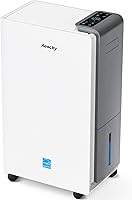
The best dehumidifiers for bedrooms include the BEDRED 95 oz Dehumidifier for dark bedrooms, the ToLife 95 oz Dehumidifier for day-night use, and the TABYIK 35 oz Bedroom Dehumidifier for small warm bedrooms.
On this page (7 sections)
- Which is the best dehumidifier for your bedroom?
- How to choose a bedroom dehumidifier that can keep up
- Where should you put a bedroom dehumidifier?
- How should you run it during the first week?
- How do you keep a bedroom dehumidifier clean?
- Which mistakes make a bedroom dehumidifier less useful?
- Which bedroom dehumidifier should you buy?
The best dehumidifier for a bedroom with mild dampness is the BEDRED 95 oz Dehumidifier, thanks to its larger tank and lights-off sleep mode. Choose WoEleLigt for hose drainage or a smaller model when placement space is limited.
These compact picks suit modest moisture problems. If your bedroom stays very humid or develops wet walls, deal with the moisture source and consider a unit with greater daily removal capacity.
For a room-by-room overview, see our home dehumidifier size and room guide. Our dehumidifier size guide explains why floor area alone isn't enough.
Our picks at a glance
-
1

-
2

-
3

- 4
 Check it
avylo 42 oz Small Dehumidifier
Best for cooler small rooms - 5
 Check it
WoEleLigt 98 oz Quiet Dehumidifier
Best for bedrooms near drains - 6
 Check it
avylo 25 oz Bedroom Dehumidifier
Best for tight bedside spaces - 7
 Best for planned running schedulesCheck it
Which is the best dehumidifier for your bedroom?
Choose BEDRED for a dark sleep setting, ToLife for separate daytime and nighttime modes, or WoEleLigt for a usable hose connection. The smaller picks trade water storage for easier placement.
PocketVerdict compared dimensions, water storage, operating controls and drainage, with bedroom use as the priority. Noise and collection figures below are manufacturer claims, and their conditions may differ.
BEDRED 95 oz Dehumidifier
- 95 oz tank
- Lights-off sleep mode
- Automatic shutoff
- 7-color ambient light
Choose BEDRED for mild bedroom dampness when you want a larger collection tank and ambient lights that switch off in sleep mode.
Pros
- Sleep mode turns off ambient lights
- Large collection tank
- Automatic shutoff when full
Cons
- Taller and wider than several compact picks
- No daily moisture-removal figure provided
BEDRED suits a bedroom where turning off ambient lights matters more than having several running modes. Its sleep setting switches those lights off and reduces noise, so you don't need to cover the unit to darken the room.
The 95 oz tank gives collected water more storage space than the mini models. That helps with your emptying routine, but BEDRED doesn't provide a daily removal figure here, so don't choose it for drying speed.
Its body is 6.7 x 8.7 x 14.6 in. Allow extra space to remove the tank and keep nearby curtains from drifting across the air openings.
Buy it for mild dampness when you have room beside a dresser or on another stable surface. Skip it if persistent moisture is your main problem or you need a known collection rate to size the unit.
ToLife 95 oz Dehumidifier
- 95 oz tank
- Powerful and low-speed sleep modes
- Full or misplaced tank shutoff
- 7-color lighting
Separate powerful and sleep modes suit a bedroom used for work during the day and rest at night. Plan around its automatic stop after 48 hours.
Pros
- Two operating modes
- Large collection tank
- Shuts off if the tank is full or misplaced
Cons
- Automatically stops after 48 hours of operation
- Best suited to small, closed spaces
ToLife is a good fit for a bedroom that doubles as a daytime workspace. You can choose its powerful mode while you're awake, then switch to low-speed sleep mode for the night.
ToLife claims sleep-mode sound below 30 dB. Its 95 oz tank has shutoff protection for both a full tank and one that isn't seated correctly.
The important routine detail is its automatic stop after 48 hours of operation. Check its status during longer damp spells rather than assuming it will keep collecting until the tank fills.
Choose ToLife if you'll adjust the mode as your day changes and don't mind checking it regularly. Skip it for uninterrupted multi-day running, and don't assume the color-lock lighting option means sleep mode automatically darkens every light.
TABYIK 35 oz Bedroom Dehumidifier
- 35 oz transparent tank
- Separate light button
- Automatic shutoff
- TABYIK claims 28 dB operation
A transparent tank and separate light control suit a small, warm bedroom where you want simple operation and visible water collection.
Pros
- Compact footprint
- Water level visible through tank
- Lighting can be switched off separately
Cons
- Shuts off at about 700 to 800 ml despite its 1000 ml tank
- Recommended operating range is 59°F to 104°F and above 45% RH
TABYIK suits a small, warm bedroom where you want visible water collection. The transparent tank makes quick checks easy, while a separate light button lets you turn off its colored lighting.
TABYIK claims up to 16 oz of collection per day at 86°F and 80% relative humidity. Expect less collection as the room gets cooler or drier, and use its recommended range of 59°F to 104°F and above 45% RH.
Although the tank is described as 35 oz, shutoff occurs at about 700 to 800 ml. Plan emptying around that cutoff rather than the tank's full physical volume.
Choose it for modest dampness and simple controls. Skip it if you need to leave a heavily damp room unattended for long stretches, because its compact size and collection limits are the more important considerations.
avylo 42 oz Small Dehumidifier
- 42 oz transparent tank
- Automatic defrost
- Built-in handle
- avylo claims around 28 dB operation
Automatic defrost makes this worth considering for a small room that sometimes gets cooler. It doesn't establish suitability for an unheated bedroom.
Pros
- Automatic defrost
- Visible water collection
- Built-in carrying handle
Cons
- Coverage figures conflict
- No minimum operating temperature provided
The avylo 42 oz model suits someone who wants automatic defrost in a compact unit. That feature helps manage frost buildup when conditions get cooler, though it doesn't make this an established choice for an unheated room.
Its transparent tank and carrying handle make it practical to inspect and move. Keep it upright, empty it before moving, and choose one location long enough to judge the room's humidity trend.
avylo claims up to 16 oz of daily removal at 86°F and 80% RH, with sound around 28 dB. Its coverage figures conflict, so don't size a bedroom around the largest advertised area.
Choose it for a small room with mild dampness and occasional cooler conditions. Skip it if your buying decision depends on a clear minimum operating temperature or dependable performance across a large space.
WoEleLigt 98 oz Quiet Dehumidifier
- 98 oz stated tank
- Included drain hose
- High-power and sleep modes
- Ambient light can be switched off
Choose WoEleLigt when a suitable nearby drain lets you use the included hose. Two modes and optional lighting also suit bedroom use.
Pros
- Drain hose included
- Manual emptying also available
- Shuts off if the tank is full or misplaced
Cons
- Hose needs a suitable drainage route
- Conflicting tank-volume figures
WoEleLigt is the practical choice when a nearby drain makes hose use possible. Its included hose gives you an alternative to carrying the tank through the bedroom.
There are high-power and sleep modes, and the ambient light can be turned off. WoEleLigt claims sleep-mode sound below 30 dB and a daily removal capacity of 1 liter, without conditions that allow a direct comparison with the other models.
Tank capacity is described as both 98 oz and 2.5 liters. That difference matters less if you'll use the hose, but it makes exact tank-based emptying estimates unreliable.
Choose it when the hose can follow the required drainage route without crossing a walkway. Skip it if you'd need uphill drainage without a suitable solution, or if you mainly want the largest tank and need its exact volume established.
avylo 25 oz Bedroom Dehumidifier
- 25 oz tank
- Compact body
- Automatic shutoff
- avylo claims operation under 35 dB
The smallest body by volume in this group suits limited surface space. Its small tank makes sense when easy placement matters more than longer emptying intervals.
Pros
- Smallest body by volume in this group
- Full-tank shutoff with red indicator
- Nightlight
Cons
- Smallest tank here
- Limited fit for persistent room-wide dampness
The avylo 25 oz model fits tight spaces where a larger unit would crowd the furniture. At 5.03 x 5.03 x 8.38 in, it has the smallest body by volume in this group.
Its small tank is the main tradeoff. Full-tank shutoff prevents continued collection once the cutoff is reached, but moisture removal then stops until you empty and replace it.
avylo claims up to 16 oz of removal per day at 86°F and 80% RH, and sound below 35 dB. Those warm, humid conditions shouldn't become your expected daily collection in a typical bedroom.
Choose it for mild dampness when you can check the tank often and have very little surface space. Skip it if you dislike frequent emptying, and avoid placing it beside your pillow simply because it fits on the nightstand.
Newo 44 oz Quiet Dehumidifier
- 44 oz tank
- Four shutoff timers plus continuous operation
- Three modes
- Adjustable light brightness
Newo suits people who want longer timed runs, several operating modes and adjustable lighting. Its shortest shutoff timer is a full day.
Pros
- 24, 48, 72 and 96-hour timers plus continuous operation
- Remembers timer, mode and lighting settings
- Automatic shutoff and defrost
Cons
- No daily moisture-removal figure provided
- No short bedtime countdown timer
Newo suits someone who wants timed runs over several days and more control over lighting. It offers 24, 48, 72 and 96-hour shutoff options, plus continuous operation.
Sleep, normal and performance modes let you choose how it runs. Newo also remembers the last timer, mode and lighting settings, so check those settings when restarting it after a break.
The 44 oz tank sits between the smallest and largest options here. Automatic defrost is included, while its 10 light colors and 3 brightness levels give you choices if you want a gentle nightlight.
Choose Newo for those controls in a short, compact body. Skip it if you want a 2-hour or 4-hour bedtime countdown, or if daily removal capacity is essential to your choice, because no collection figure is provided.
How to choose a bedroom dehumidifier that can keep up
Choose by measured humidity and moisture load first, then narrow the options by sound, light controls and drainage. A quiet model is useful only if it removes enough water for your room.
The best bedroom dehumidifier starts with a humidity reading
Use a separate hygrometer to find out whether the bedroom needs drying. Check readings at different times, especially in the morning and after nearby showering or indoor clothes drying.
The EPA advises keeping indoor relative humidity below 60%, ideally between 30% and 50%. Around 45% to 50% can be a practical starting point for a damp bedroom, without trying to make the air as dry as possible.
Place the hygrometer away from the dehumidifier's outlet, direct sunlight and an open window. A reading beside the unit can differ from the air around your bed or the far side of the room.
Record the room's usual temperature too. A compact unit's collection claim from hot, humid conditions won't describe its output in a cool bedroom near your target humidity.
Match capacity to the moisture problem
A small semiconductor dehumidifier makes sense for mild dampness in an enclosed space. Persistent condensation across several windows, wet walls or humidity that stays high calls for a broader assessment.
Daily moisture-removal capacity describes how much water a unit can collect under stated conditions. Tank capacity describes storage, so a large bucket attached to a low-output unit still means slow removal.
Check for leaks, moisture from an attached bathroom and damp air entering from elsewhere. Running a compact unit against a continuing source can leave the tank collecting water while the room remains too humid.
For help deciding between compact and higher-capacity types, use our guide to choosing a dehumidifier. Choose a different class of unit if these models can't match the room's moisture load.
Compare sleep controls separately from noise claims
For bedroom use, light control can matter as much as fan sound. A low noise number won't help if a bright display or cycling ambient light keeps drawing your attention.
Check what sleep mode actually changes. It may reduce fan speed, switch off ambient lighting or do both, and those functions aren't interchangeable.
Manufacturer noise figures are useful for narrowing options, but measurement distance and operating mode affect the number. A steady fan sound may also feel different from a vibration against furniture.
Our quiet dehumidifier picks offer another route if sound is your main concern. Keep placement options in mind before choosing a unit purely by its stated decibels.
Choose tank storage around your daily routine
Choose a larger tank if carrying water is inconvenient, provided the unit otherwise suits the room. Smaller tanks are reasonable when the dehumidifier is easy to reach and you can empty it regularly.
Don't divide tank volume by a maximum removal claim and expect an exact emptying schedule. Actual collection changes with weather, room temperature, incoming moisture and the unit's shutoff threshold.
A tank that fills overnight stops further collection until morning. Before bed, check the water level instead of relying on automatic shutoff to manage the room's humidity.
Decide whether a hose is practical before buying
Hose drainage helps only when the room has a suitable route to a drain. It should reduce chores without creating a trip hazard or a place where water can back up.
For gravity drainage, the hose generally needs a continuous downward path. Follow the unit's instructions for the connection and required slope, and don't assume an included hose can lift water uphill.
A bedroom far from a drain often suits manual emptying better. Leaving a hose in an open container adds another container that can fill, so it doesn't remove the need for checks.
Where should you put a bedroom dehumidifier?
Put it on a stable, level surface with clear airflow, away from bedding and curtains. Follow its required clearances rather than squeezing it into the last available gap.
Leave room for air and tank removal
Check where air enters and leaves before choosing a spot. A shelf may fit the body while blocking the rear outlet, and a narrow gap can make the tank awkward to remove.
Leave enough working space to lift or slide the tank out without tilting water onto furniture. Protect nearby belongings by choosing a location where routine emptying is easy and spills are manageable.
Don't hide a running unit inside a closed wardrobe to dry the bedroom. It will mainly circulate air within that small enclosure rather than treating the room.
Keep sound away from your pillow
Start across the room from the bed if the layout allows. A compact body doesn't need to occupy a nightstand, and distance can make fan sound less noticeable.
If you hear rattling, check that the tank is seated properly and the unit stands evenly. Don't wrap it in fabric or block vents to quiet it.
Keep the power cord away from walking routes and places where the tank may drip during removal. Follow the electrical instructions supplied with the unit.
Reduce incoming moisture while it runs
Close exterior windows while dehumidifying, and keep the bedroom door closed when you're trying to dry that room alone. Open connections to damp adjoining spaces increase the air volume and moisture the unit must handle.
Use bathroom extraction for showers and avoid drying wet laundry in the bedroom where possible. Removing moisture at its source reduces the work needed afterward.
If condensation remains concentrated on a cold window, consider that surface temperature as well as room humidity. More dehumidifier runtime isn't always the whole answer.
How should you run it during the first week?
Use the first week to check whether room humidity falls and stays under control. Water in the tank shows collection, but the humidity trend tells you whether the unit is enough.
Start with a properly seated, empty tank and the controls set as intended. Note the humidity and temperature, then compare readings at similar times over the next few days.
If the unit has a stronger daytime mode, use it while you're awake, then choose sleep mode at bedtime. Check the morning reading to see whether the quieter setting keeps up overnight.
Don't judge a compact model after only a brief run. Equally, don't keep extending runtime indefinitely when the room remains persistently humid.
When little water appears, check the tank position, airflow, room temperature and current humidity before assuming a fault. Our guide to a dehumidifier not collecting water walks through those checks.
If humidity is already within your chosen range, less water collection can be normal. Avoid chasing a fuller bucket by trying to dry an already comfortable room further.
How do you keep a bedroom dehumidifier clean?
Keep the tank and air openings clean, using the care instructions for your model. Standing water and dust deserve regular attention even when the unit still appears to run normally.
Unplug it before cleaning, empty the tank and wash it as directed. Rinse away cleaning residue and let removable parts dry before reassembly.
Check accessible intake surfaces for dust, especially near carpets, bedding and pet sleeping areas. Clean only the parts the manual identifies as user-serviceable, and don't immerse the powered body or adapter.
Use our dehumidifier cleaning guide for a fuller care routine. Before storing the unit, drain it and let the tank dry rather than leaving collected water inside.
Don't add fragrances, disinfectants or other liquids to the tank unless the instructions explicitly allow them. The tank collects water from the air; it isn't a scent diffuser or a clean-water reservoir.
Which mistakes make a bedroom dehumidifier less useful?
The biggest mistakes are buying by tank size, blocking airflow and ignoring the moisture source. Each can leave you with a running appliance that doesn't solve the room's problem.
- Choosing by coverage alone: a broad square-foot claim doesn't account for how damp the room is or how cold it gets.
- Expecting maximum output every day: warm, very humid conditions support more collection than a cooler room near its target humidity.
- Treating a timer as humidity control: a timer stops after a set interval; it doesn't establish that the room has reached your target.
- Leaving the tank full: shutoff protects against continued collection, but the unit can't keep drying until the tank is emptied.
- Forgetting mode changes: a quieter setting may remove moisture more slowly, so check morning humidity rather than assuming equal performance.
- Ignoring leaks or visible mold: a dehumidifier helps manage humidity but doesn't repair water damage or clean affected material.
For that last issue, our guide to dehumidifiers and mold concerns explains where moisture control helps and where further work is needed.
Which bedroom dehumidifier should you buy?
Choose the best dehumidifier for your bedroom by its main constraint: nighttime light, limited space, emptying chores or moisture load. Once you've measured humidity, use these rules to make the final choice.
- Choose BEDRED for mild dampness when a dark sleep setting and larger tank are your priorities.
- Choose ToLife when you want to switch between daytime and nighttime modes and can manage its automatic stopping routine.
- Choose TABYIK for a small, warm room where visible collection and separate light control matter.
- Choose the avylo 42 oz for a compact option with automatic defrost, provided the room suits its operating limits.
- Choose WoEleLigt when a nearby drain lets you use its hose properly.
- Choose the avylo 25 oz when available surface space is your biggest limit and regular emptying is easy.
- Choose Newo for longer timed runs, remembered settings and adjustable lighting.
If room humidity stays high despite correct setup, stop choosing among small tanks and reassess removal capacity. Our home dehumidifier guide is the next step for comparing options for a heavier moisture load.
Sources
Our top 3 picks at a glance
-
1
-
2
-
3
Frequently asked questions
What size dehumidifier do I need for a bedroom?
Choose by bedroom size, measured humidity and daily moisture-removal capacity, rather than tank volume alone. A compact semiconductor model suits mild dampness in a small, closed room.
Persistent high humidity, wet surfaces or moisture entering from adjoining rooms calls for fixing the source and considering a higher-capacity unit.
Are small dehumidifiers quiet enough for a bedroom?
A small dehumidifier may suit bedroom use, especially with a sleep mode, but fan sound can remain noticeable at night. Compare light controls as well as noise claims.
Place the unit away from your pillow on a stable surface, and keep its air openings clear rather than enclosing it to muffle sound.
How often should I empty a bedroom dehumidifier?
Check the tank daily at first, then adjust your routine to how quickly it fills. Empty it before bedtime if it is close to its cutoff point.
A larger tank can extend collection time, but room conditions and removal rate determine the actual interval between emptying.
Can I leave a bedroom dehumidifier on overnight?
You can run a bedroom dehumidifier overnight when its instructions allow it and it is correctly placed and maintained. Start with an empty, properly seated tank and clear air openings.
Keep bedding, curtains and cords out of the way, and remember that full-tank shutoff doesn't replace routine checks.
Should a bedroom dehumidifier have a drain hose?
Choose hose drainage when you have a suitable drain and can route the hose according to the unit's instructions. WoEleLigt includes a hose, which can reduce manual emptying.
For a bedroom without a practical drainage route, a removable tank is usually simpler than running a hose across the floor.