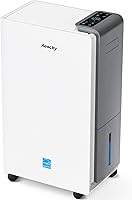
Do Dehumidifiers Help With Mold?
Yes, dehumidifiers help with mold prevention by lowering excess indoor humidity. They don't remove existing mold or fix leaks, so pair humidity control with moisture repairs and suitable cleanup.
On this page (8 sections)
- How do dehumidifiers help with mold?
- Can a dehumidifier remove mold that's already there?
- What humidity should you aim for?
- How do you choose a dehumidifier for mold prevention?
- How should you set up a dehumidifier?
- What care keeps humidity control working?
- Why does mold return despite running a dehumidifier?
- Do dehumidifiers help with mold enough to buy one?
Yes, dehumidifiers help with mold prevention by removing excess moisture from indoor air. They don't kill existing mold, clean affected surfaces, or repair the leak that caused the problem.
The right approach depends on what is wet: humid room air, a cold surface collecting condensation, or building materials soaked by water entry. Measure humidity, find the moisture source, and choose equipment only after you know which problem needs solving.
How do dehumidifiers help with mold?
Dehumidifiers make conditions less favorable for new mold growth when excess air moisture is the cause. They draw in damp air, collect water, and return drier air to the room.
That helps in a basement that stays humid through summer or a room where moisture builds up between uses. It won't keep a wall dry if rainwater or a leaking pipe continues soaking it.
The US Environmental Protection Agency recommends keeping indoor relative humidity below 60%, ideally between 30% and 50%. Surface moisture matters too, so a comfortable room reading doesn't cancel out visible condensation or a damp patch.
Can a dehumidifier remove mold that's already there?
No, a dehumidifier doesn't remove existing mold from walls, wood, carpet, or furniture. The moisture source and affected materials need separate attention.
Don't paint over growth or assume cleanup is complete because the musty smell fades. Porous materials that stay wet may need removal rather than surface cleaning.
For extensive growth, repeated outbreaks, contaminated floodwater, or suspected contamination inside heating or cooling equipment, get qualified advice before disturbing the area. Avoid directing fans or dehumidifier airflow across moldy surfaces.
What humidity should you aim for?
Start with a 45% to 50% humidity setting, then check whether the room stays dry without condensation. You don't need the appliance's lowest setting to control ordinary household humidity.
Compare readings over several days, including after rain and during humid weather. Our guide to a good humidity level for a basement explains how room conditions affect your target.
Does a hygrometer help with mold prevention?
A hygrometer helps you spot high humidity and check progress, but it cannot detect mold or moisture hidden inside a wall. It's especially useful before buying a dehumidifier and for checking areas away from the appliance.
The TempPro TP50 displays temperature and humidity, refreshes readings every 10 seconds, and records high and low levels. Its stand and magnetic back give you options for placing it where you can check it regularly.
Choose it if you need a simple room monitor without app controls. Skip it if remote alerts are essential, and remember that a meter measures moisture rather than removing it.
Place it away from direct sunlight, heating vents, splashes, and the dehumidifier's exhaust. Allow the reading to settle after moving it, and focus on patterns rather than small differences between displays.
How do you choose a dehumidifier for mold prevention?
Choose by moisture load, room temperature, layout, and drainage, with floor area as a starting point. A damp open basement needs different equipment from a small room with occasional humid air.
Pints per day describes water removal under specified conditions, while bucket volume tells you how much water the unit stores. A bigger bucket reduces emptying trips; it doesn't increase moisture removal.
Coverage claims also don't mean one machine can dry every closed room on a floor. Doorways, separate rooms, and blocked airflow affect how well damp air reaches the appliance.
Use our dehumidifier size guide to narrow the capacity, then check operating temperature limits before buying for a cool basement. The home dehumidifier guide compares options across room types.
Midea Cube: for smaller spaces and fewer emptying trips
The Midea Cube suits a smaller damp room where bucket handling matters. It removes up to 20 pints per day, has a 3.2-gallon bucket, and is designed for spaces up to 1,500 sq ft.
Choose it for a modest moisture problem when you want bucket collection now and the option of hose drainage later. Wi-Fi control through the SmartHome app also suits someone who wants to check humidity and water level remotely.
Plan how you'll empty the bucket before letting it fill, since collected water adds weight. A nearby suitable drain can save carrying water across the room.
Skip this model for a large, persistently wet basement where a smaller-capacity unit would struggle to reach the target. App control and a large bucket don't make up for insufficient water removal.
KNKA: for larger areas with heavier moisture loads
The KNKA suits a larger damp area where higher removal capacity matters more than bucket size. KNKA specifies up to 80 pints per day at 95°F and 95% relative humidity, or 56 pints at 86°F and 80% relative humidity.
KNKA describes coverage up to 5,500 sq ft, but use the room's dampness and layout to judge suitability. Neither removal figure promises the same output in a cooler, less humid basement.
Choose it when you have a larger connected space and a practical drainage route. Continuous drainage deserves priority here because higher water removal can mean frequent bucket emptying.
Skip it if your only problem is a small room with mild, occasional humidity. If the drain sits above the appliance's outlet, don't assume the included hose can move water uphill.
Compare both models with the best dehumidifiers for basements before choosing capacity and drainage features.
How should you set up a dehumidifier?
Set it on a stable, level surface with the clearances required by its manual, and give air a clear path through the room. Keep it away from splashes and avoid blowing air across moldy materials.
KNKA instructs users to leave its unit upright for 24 hours before first use. Follow each model's transport and startup instructions rather than applying one brand's waiting period to every appliance.
Keep outside doors and windows closed during normal operation so the unit isn't continually drying incoming humid air. Indoor doors can stay open between the areas you intend to dry, provided airflow is appropriate for the affected space.
For gravity drainage, route the hose downhill to a suitable drain without kinks, raised loops, or a submerged end. Check the connection and confirm water reaches the drain before leaving the setup unattended.
If you use the bucket, check it often during the first few days to learn the emptying routine. Follow our guide on where to put a dehumidifier in a basement for placement around walls and obstructions.
What care keeps humidity control working?
Keep the filter, air openings, and water collection system clean according to the manual. Restricted airflow and a full bucket can interrupt moisture removal even when the controls are set correctly.
Inspect the drain hose for clogs or accidental bends, especially after moving the unit. Empty and clean the bucket as directed rather than leaving collected water sitting for long periods.
Both the Midea and KNKA have washable filters; let a washed filter dry before reinstalling it as instructed. Disconnect power before maintenance, and avoid spraying water into electrical parts.
Our guide to cleaning a dehumidifier covers the filter, coils, and bucket. Before storage, empty the water and let the parts dry as the manual directs.
Why does mold return despite running a dehumidifier?
Recurring mold usually means moisture remains somewhere the appliance hasn't solved. Check for leaks, water entry, cold surfaces with condensation, or materials that never dried fully.
Inspect pipes, window wells, corners behind furniture, and the floor-wall joint after rain. A damp patch that returns in the same place calls for investigation even when nearby air readings look normal.
Avoid these common mistakes:
- Buying by floor area alone: account for dampness, temperature, and separate rooms.
- Setting humidity as low as possible: start with a sensible target and check the room.
- Ignoring repeated bucket shutoffs: empty more often or arrange suitable drainage.
- Judging success by smell: inspect materials and track humidity too.
- Buying a larger machine before fixing leaks: stop incoming water first.
If humidity stays high, check airflow, drainage, settings, and operating conditions before replacing the appliance. If humidity falls but a surface stays damp, investigate that surface and its moisture source.
Do dehumidifiers help with mold enough to buy one?
Buy a dehumidifier when measured humidity stays high after you address water entry and cleanup needs. If air humidity is already controlled but one wall remains wet, put the next effort into finding that water source.
Choose the TempPro to establish a baseline and monitor progress. Choose the Midea for a smaller damp space with convenient bucket collection, or the KNKA for a larger moisture load with a workable drain route.
Dehumidifiers help with mold prevention when they keep the space dry consistently. Use the basement dehumidifier guide to make the final equipment choice, then keep checking both humidity and the surfaces that were damp.
Frequently asked questions
Do dehumidifiers kill mold?
No, dehumidifiers don't kill mold or remove it from walls, wood, carpet, or other materials. They remove moisture from the air, which helps make new growth less likely.
Fix the water source and arrange suitable cleanup or removal of affected materials rather than relying on the appliance alone.
What humidity should I keep to help prevent mold?
Keep indoor relative humidity below 60%, ideally between 30% and 50%, as the US EPA advises. Use a separate hygrometer to check the room and watch for condensation or damp surfaces.
A normal air reading doesn't rule out a leak, wet material, or moisture behind a wall.
Will a dehumidifier stop mold from coming back?
A dehumidifier can help prevent mold from returning when excess indoor humidity caused the problem and the affected area has been properly addressed. It won't prevent growth fed by an active leak or wet building materials.
Track humidity over time and investigate recurring damp spots instead of only lowering the setting.
Should I run a dehumidifier in a basement with mold?
A dehumidifier can lower basement humidity, but avoid directing airflow across moldy surfaces because it could spread spores. For extensive growth, contaminated floodwater, or suspected mold in heating or cooling equipment, get qualified advice before running equipment in the affected area.
Cleanup and moisture repair still need attention.