What Is a Good Humidity Level for a Basement?
A good humidity level for a basement is 30% to 50% relative humidity (RH). Aim for about 50% or lower to limit dampness, and check the reading with a hygrometer.
On this page (8 sections)
- What is a good humidity level for a basement?
- How do you measure basement humidity?
- Why does basement humidity rise?
- What should you do if basement humidity is above 50%?
- How can you keep basement humidity near 50%?
- Can basement humidity be too low?
- What does a high basement reading mean for mold?
- How should you choose a humidity target for your basement?
A good humidity level for a basement is 30% to 50% relative humidity (RH). Aim for about 50% or lower, and use a hygrometer to check whether the room needs attention.
A single reading is only a snapshot. Measure in more than one spot and at different times, especially if one corner smells musty or feels damp.
What is a good humidity level for a basement?
Keep basement humidity between 30% and 50% RH when you can. Around 50% is a practical upper target for many homes, while the best setting can depend on the season, temperature, and conditions in the room.
The U.S. Environmental Protection Agency recommends keeping indoor humidity below 60%, ideally between 30% and 50%.
Its mold and moisture guidance says controlling moisture helps prevent mold growth.
A reading above 50% doesn't prove there is a mold problem. It does mean you should check for leaks, wet materials, condensation, and other sources of moisture, then monitor whether the level stays raised.
The Govee H5075 Hygrometer can help track these changes with temperature and humidity graphs. Its Bluetooth connection lets you check readings in the app while your phone is within range.
How do you measure basement humidity?
Use a hygrometer placed in the room, then give it time to settle before you read it. A meter gives you a clearer picture than judging dampness by smell or touch alone.
Keep the sensor away from direct sun, heating or cooling vents, windows, exterior doors, and a dehumidifier's outlet. These spots can show conditions that don't represent the rest of the basement.
Check readings at different locations if the space has closed rooms, storage areas, or a damp corner. Also compare readings at different times, since outdoor weather and basement use can affect moisture levels.
The Govee H5075 Hygrometer displays temperature and humidity and supports app alerts when readings fall outside a preset range. It uses Bluetooth rather than Wi-Fi, so alerts and remote checks depend on your phone's connection to the device.
Why does basement humidity rise?
Basement humidity often rises when water enters or humid air reaches cool basement spaces. Finding the moisture source matters because a dehumidifier may reduce the reading without fixing a leak or drainage issue.
Common causes include:
- Water seeping through walls or floors
- Plumbing leaks or a leaking water heater
- Humid outdoor air entering through open windows
- Poor drainage around the foundation
- Wet laundry or stored damp items
- Moisture entering from a connected crawl space
Look for water stains, peeling paint, musty odors, or condensation on cold pipes and windows. If water is entering through the foundation or a pipe is leaking, address that source first.
The EPA's moisture control guidance recommends fixing leaks and drying wet materials promptly. If you see widespread water damage or recurring seepage, a qualified professional can help identify the cause.
What should you do if basement humidity is above 50%?
First check for leaks and wet materials, then use a dehumidifier if the air remains humid. Close windows when outdoor air is damp, and keep the hygrometer in place so you can see whether your changes work.
A dehumidifier can lower airborne moisture, but it won't repair a pipe, stop groundwater, or ensure hidden materials are dry. Empty its tank or set up drainage as directed, and keep the air intake and outlet clear.
For choosing a unit, see our best dehumidifiers for home guide, which explains how room size and conditions affect the choice. Our guide to dehumidifiers and mold explains what moisture control can and can't do.
Would app alerts help track a good basement humidity level?
App alerts can help you track basement humidity while your phone is within Bluetooth range. The Govee H5075 Hygrometer supports alerts when temperature or humidity moves outside a range you set.
Its app includes temperature and humidity graphs, which can help you compare readings over time. Govee gives a maximum Bluetooth range of 164 feet in open, unobstructed conditions, so basement walls and floors may limit the connection.
Choose it if app checks and stored readings are useful to you. If you only want to glance at a local display, a simpler meter may be enough.
Is a basic display enough for monitoring?
A basic display is enough if you mainly want to read humidity in the basement itself. The TempPro TP50 Hygrometer shows current humidity and temperature, with high and low records for comparing changes.
It refreshes readings every 10 seconds and includes a tabletop stand and magnetic back. Place it somewhere visible, but away from a dehumidifier's airflow or a cold exterior wall.
Choose this style for quick checks during basement visits. A second meter can help compare separate areas if the basement has more than one room.
How can you keep basement humidity near 50%?
Fix water sources, limit humid air entering, and use a dehumidifier when readings remain high. Check the hygrometer again after making changes so you know whether they helped.
Start with these practical steps:
- Repair plumbing leaks and address roof or foundation water entry.
- Keep gutters clear and direct downspouts away from the foundation.
- Close basement windows when outdoor air is humid.
- Dry wet materials promptly and avoid storing damp items.
- Use a dehumidifier with a target setting near 50% RH.
- Recheck readings in the dampest parts of the basement.
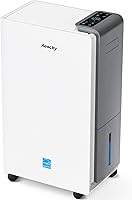
A dehumidifier with a humidistat can manage operation around a set target. The AEOCKY 50 Pint Quiet Dehumidifier has adjustable humidity control from 40% to 80% and includes a drain hose for continuous gravity drainage.
AEOCKY rates its moisture removal at 50 pints per day at 95°F and 95% RH, or 38 pints per day at 86°F and 80% RH. These are extraction rates, separate from its 0.8-gallon tank capacity.
AEOCKY recommends continuous gravity drainage because the tank can fill quickly, and the tank must remain installed during hose drainage. Actual moisture removal depends on conditions, so use your basement readings to guide operation.
For more help choosing a unit for this space, see best dehumidifiers for basements. Our guide on where to put a dehumidifier in a basement covers placement and airflow.
Can basement humidity be too low?
Yes, basement humidity can fall below the usual 30% to 50% indoor range. If readings stay under 30% RH, reduce dehumidifier use and check the meter's placement and accuracy.
Very dry air can feel uncomfortable for some people, but there is no need to add moisture automatically. Confirm the reading in more than one spot and follow the instructions for your hygrometer and dehumidifier.
What does a high basement reading mean for mold?
A high reading signals a moisture concern, but it doesn't confirm mold is present. Look for visible growth, damp surfaces, and water damage, and fix the source of moisture.
Mold can grow where materials stay wet, including areas that a room-level hygrometer doesn't measure. Check accessible areas behind stored items and around pipes if you have a persistent musty smell or repeated condensation.
The EPA recommends drying wet areas within 24 to 48 hours to help prevent mold growth. If mold covers a large area or keeps returning, consider getting professional advice.
How should you choose a humidity target for your basement?
For a good humidity level in a basement, start near 50% RH and adjust based on readings and conditions. Keep it within the general 30% to 50% range when practical, while investigating any water intrusion or recurring dampness.
Choose the Govee H5075 Hygrometer if you want Bluetooth alerts and graphs, or the TempPro TP50 Hygrometer for a local display with high and low records. If humidity stays raised after you address moisture sources, consider the AEOCKY 50 Pint Quiet Dehumidifier and review our basement dehumidifier guide.
Frequently asked questions
What humidity should a basement be in summer?
Keep basement relative humidity at about 50% or lower in summer, while staying within the usual 30% to 50% indoor range when practical. Humid outdoor air can add moisture, so close basement windows when outdoor air is damp and monitor how cooling or dehumidification affects the reading.
Is 60% humidity too high for a basement?
A steady 60% RH is above the usual 30% to 50% target for a basement. Check the reading in more than one spot, look for leaks or condensation, and use a dehumidifier if the level stays high after you address sources of moisture.
Where should I put a hygrometer in a basement?
Place a hygrometer in the area you want to monitor, away from windows, exterior doors, direct sunlight, and a dehumidifier's airflow. If the basement has separate rooms or a damp corner, take readings in those locations too because humidity can vary across the space.
Should I run a dehumidifier all the time in a basement?
You usually don't need to run a basement dehumidifier nonstop if it has a humidistat. Set a target near 50% RH, check the level periodically, and follow the unit's instructions; investigate persistent moisture rather than relying on the appliance alone to handle leaks or water intrusion.