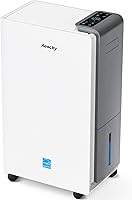
Where to Put a Dehumidifier in a Basement
The best place to put a dehumidifier in a basement is an open central area or the dampest connected room. Choose a dry, level spot with the vent clearance required by the manual and either easy bucket access or a downhill route to a drain.
On this page (9 sections)
- Where should you put a dehumidifier in a basement?
- How much space should you leave around it?
- Should you put it near the dampest wall?
- Can you place it beside a floor drain?
- What if there isn't a drain nearby?
- Which dehumidifier suits your basement setup?
- What setup and care help the location work?
- Which placement mistakes should you avoid?
- Where to put a dehumidifier in a basement: make the final choice
Put a dehumidifier in a basement's open central area, or in the dampest room if moisture is concentrated there. The spot should be dry and level, with clear vents, a suitable outlet, and a practical way to empty collected water.
Deciding where to put a dehumidifier in a basement starts with airflow and drainage. A drain-side corner is useful only if air can reach the unit, while a central spot becomes inconvenient if you can't remove the bucket.
Where should you put a dehumidifier in a basement?
Choose an open spot connected to the area you want to dry. Start near the center of an open basement, but favor the dampest room when walls divide the space.
A dehumidifier draws in nearby air, removes moisture, and releases drier air. It needs that air to mix with the rest of the basement rather than circulate within a cramped storage corner.
Keep interior doors open between rooms you want one unit to serve, where practical. Close exterior doors and windows so humid outdoor air doesn't keep replacing the air you're drying.
A closed storage room may stay damp even when the main room reaches your target. Check it separately instead of assuming one display represents the whole floor.
For help matching the appliance to the space, see the best dehumidifiers for basements.
Where should a dehumidifier go in a divided basement?
Put it in the room with the highest sustained humidity, with a clear path for air through connecting doorways. A hallway can work if it has enough vent clearance and doesn't become a trip hazard.
If rooms must stay closed, moving one unit between them may be inconvenient. Separate units can make more sense than buying a larger machine and expecting it to dry through closed doors.
How much space should you leave around it?
Leave the clearance required by the manual at every intake and outlet. There isn't one wall distance that suits all models.
Measure the appliance's working space, including room to remove its bucket and filter. A footprint that fits between shelves may still leave too little room for airflow or care.
Keep laundry, curtains, boxes, and furniture outside that space. Don't aim the outlet directly into the intake of a nearby appliance or cover an upward-facing vent with a shelf.
Place the unit on a firm, level surface. A soft rug or unstable platform can make it harder to keep the appliance upright and its drainage parts correctly positioned.
Should you put it near the dampest wall?
Place it near the damp area on a dry floor, with room for air to circulate. Don't push it against a wet wall or position it beneath an active leak.
A dehumidifier manages moisture in the air; it doesn't stop water entering through a foundation, pipe, or window. Repair the source rather than relying on constant operation to handle incoming water.
Keep cords and controls away from splashes and puddles. If a location is prone to flooding, choose another dry location and address the water problem.
For musty areas, read whether dehumidifiers help with mold. Lower humidity can help limit conditions that favor growth, but existing mold needs separate attention.
Can you place it beside a floor drain?
Yes, if the unit has clear airflow and the hose has a continuous downhill route to a suitable drain. The drain's location should guide placement without forcing the appliance into a blocked corner.
Measure the actual hose route, including bends. Avoid kinks, uphill sections, and low loops where water can collect.
The Ebusin hose suits someone whose included hose falls short of a reachable lower drain. Its rubber body can be cut to length, and its threaded fitting uses a rubber seal.
Skip it if your existing hose already reaches or your connection doesn't match. Extra length cannot lift water uphill, and compatibility depends on the fitting rather than the dehumidifier's brand alone.
Secure the hose end without submerging it in standing water. Follow the appliance's connection instructions, then watch the first drainage cycle and check for leaks.
What if there isn't a drain nearby?
Use the built-in bucket in an easy-to-reach spot, or choose a pump setup suited to your drain route. A longer gravity hose won't solve an uphill run.
Leave enough space to carry the bucket out without tilting it around furniture. Check it frequently at first so you learn how quickly it fills under your basement's conditions.
For less frequent manual emptying, compare dehumidifiers with a pump. Match the pump's permitted lift and hose length to the route before choosing the unit's location.
Does a basement dehumidifier need to be raised?
A level floor is usually suitable unless the manual directs otherwise. Raising the appliance is not a substitute for checking its drainage instructions.
Don't use stacked boxes, loose blocks, or a narrow shelf to gain hose height. If an approved stable support cannot provide the needed slope, use the bucket or a suitable pump arrangement.
Which dehumidifier suits your basement setup?
Choose the KNKA for greater moisture-removal capacity, the AEOCKY for a quieter living-space setup, and the Ebusin hose only when extra drainage reach solves a specific problem. Capacity, noise, and bucket access matter more than a coverage label alone.
KNKA: for heavier moisture loads
The KNKA suits a larger connected basement or a space with more moisture to remove. KNKA rates it at 80 pints per day at 95°F and 95% relative humidity, and 56 pints at 86°F and 80% relative humidity.
Those warm, humid conditions matter: a cooler basement shouldn't be expected to produce the same daily water volume. Use our dehumidifier sizing guide to weigh room size alongside dampness.
Choose it if that capacity and either drainage option fit your layout. Skip it if your main problem is moving water uphill, since the included hose provides a gravity-drain route rather than solving elevation.
KNKA instructs you to leave the unit upright for 24 hours before first use. Its washable filter also needs accessible space for removal and cleaning.
AEOCKY: for finished basement living areas
The AEOCKY suits a basement office, TV area, or other occupied room where noise affects placement. AEOCKY puts operating noise at about 40 dB, though room surfaces and distance affect how noticeable it sounds.
Its moisture-removal figures are 50 pints per day at 95°F and 95% relative humidity, or 38 pints at 86°F and 80% relative humidity. That makes it the lower-capacity choice of these 2 units under matching conditions.
Favor continuous drainage if possible because its 0.8 gal bucket can require frequent attention in damp conditions. Keep the tank installed even when using the hose.
Skip this choice if you need the KNKA's higher stated removal rate or want a larger bucket for manual emptying. For other room types and capacities, see our home dehumidifier guide.
What setup and care help the location work?
Start with a humidity target around 45%–50%, then check conditions away from the appliance. Our guide to a good humidity level for a basement explains how to adjust that target.
Place a separate hygrometer in a representative area away from the outlet airflow, wet walls, and open windows. Compare another room too if the basement is divided.
Give readings time to settle before moving the unit or lowering its target. Water collected each day changes with temperature and humidity, so bucket volume alone doesn't show whether placement works.
Keep the filter clean and inspect the bucket and hose for buildup. Follow the model's care instructions and use our dehumidifier cleaning guide for a practical maintenance routine.
Which placement mistakes should you avoid?
Avoid blocked vents, unsafe electrical routes, and poor drainage. These can interrupt operation even when the appliance has enough capacity.
Common mistakes include:
- Hiding the unit inside a cabinet or behind storage bins.
- Choosing a drain-side spot with too little airflow.
- Running a gravity hose uphill or through a doorway.
- Placing the appliance where leaks or floodwater can reach it.
- Using extension cords instead of a suitable direct wall connection.
- Ignoring the operating temperature limits in the manual.
If humidity stays high, check the filter, drain, room connections, and moisture source before buying a larger unit. For an appliance that runs but collects little water, see why a dehumidifier may not collect water.
Where to put a dehumidifier in a basement: make the final choice
Choose the spot that combines open airflow with reliable water removal. In an open basement, start centrally; in a divided basement, prioritize the dampest room and check neighboring rooms separately.
Pick KNKA for the higher stated removal capacity or AEOCKY for an occupied space where its lower claimed noise matters. Add the Ebusin hose only when the fitting matches and the route stays downhill.
Once placement is settled, use basement humidity targets to judge the result. Steady humidity across the rooms you need to dry is more useful than a low reading beside the appliance.
Frequently asked questions
Should a dehumidifier be in the middle of a basement?
An open central spot is a good starting point for a basement with widespread dampness. Choose the dampest room instead if moisture is concentrated there, and keep connecting doors open where practical.
Closed rooms need separate humidity checks because one unit cannot draw air freely through walls.
How far should a dehumidifier be from a basement wall?
Use the wall clearance in your model's manual rather than a fixed distance for every dehumidifier. Intake and outlet positions vary, so check all sides that move air.
Also leave enough working space to remove the bucket, reach the controls, and take out the filter for cleaning.
Can I put a dehumidifier next to a basement drain?
Yes, provided the floor is dry and level and the vents have their required clearance. For gravity drainage, the hose must run downhill from the outlet without kinks or uphill sections.
Secure its end at a suitable drain and check the connection and hose route for leaks.
Should I put a dehumidifier in a finished basement?
Yes, if humidity stays high, but choose an open spot with room around the vents and access to the tank. Keep the unit out of cabinets and away from furniture that blocks airflow.
If the basement includes closed bedrooms or an office, check humidity in those rooms separately.