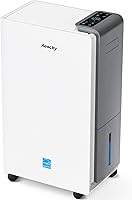
6 Best Quiet Dehumidifiers (October 2026)
The best quiet dehumidifiers for bedrooms and small rooms include the AEOCKY 50 Pint Quiet Dehumidifier for damp living spaces, the Kesnos 2 for damp bedrooms, and the boglvr 98 oz Quiet Dehumidifier for light-sensitive sleepers.
On this page (8 sections)
- How we chose the best quiet dehumidifiers
- Which quiet dehumidifier fits your room?
- How much moisture removal does a quiet room need?
- What makes a dehumidifier sound quiet at night?
- How should you set up a quiet dehumidifier?
- What care helps a quiet dehumidifier stay useful?
- Which mistakes make quiet dehumidifiers disappointing?
- Which best quiet dehumidifier should you choose?
The AEOCKY 50 Pint Quiet Dehumidifier is the best quiet dehumidifier here for rooms that need substantial moisture removal. Kesnos is the close alternative for a damp bedroom, while the smaller semiconductor picks suit mild, localized moisture problems.
Choose by moisture load first, sound second. A quiet mini unit that leaves the room damp is a poor fit, even if its footprint and noise claim look appealing.
For room-specific advice, start with our bedroom dehumidifier guide. Our home dehumidifier guide covers the wider choice of capacities and room types.
Our picks at a glance
-
1

-
2

-
3

- 4
 Check it
WoEleLigt 98 oz Quiet Dehumidifier
Best for simple overnight use - 5
 Check it
avylo 25 oz Bedroom Dehumidifier
Best for tight shelf spaces - 6
 Check it
BREEZOME 60 oz Quiet Dehumidifier
Best for scheduled small-room use
How we chose the best quiet dehumidifiers
We ranked these picks by useful moisture removal, noise claims and daily upkeep. AEOCKY leads because it combines the highest claimed removal here with a sound figure that applies at its highest setting.
Kesnos follows closely for buyers who need meaningful drying capacity with a lower stated sound level. The compact models serve a different job: controlling a smaller amount of moisture where size and nighttime comfort take priority.
All sound figures are brand claims, without a shared measurement method provided for this group. Treat small differences as a starting point, then compare operating mode, drainage needs and room fit.
| Product | Best for | Daily removal | Noise | Tank | Our score |
|---|---|---|---|---|---|
| AEOCKY 50 Pint Quiet Dehumidifier | damp living spaces | Up to 50 pints at 95°F and 95% RH | About 40 dB at highest setting, AEOCKY says | 0.8 gallons | 8.6 |
| Kesnos 2,500 Sq Ft Dehumidifier | damp bedrooms | Up to 30 pints at 95°F and 90% RH | 36 dB, Kesnos says | 0.39 gallons | 8.5 |
| boglvr 98 oz Quiet Dehumidifier | light-sensitive sleepers | Rated at 1 liter | Below 30 dB in Sleep Mode, boglvr says | 98 oz | 7.8 |
| WoEleLigt 98 oz Quiet Dehumidifier | simple overnight use | Rated at 1 liter | Under 30 dB in Sleep Mode, WoEleLigt says | 98 oz | 7.8 |
| avylo 25 oz Bedroom Dehumidifier | tight shelf spaces | Up to 450 ml at 86°F and 80% RH | Less than 35 dB, avylo says | 25 oz | 7.6 |
| BREEZOME 60 oz Quiet Dehumidifier | scheduled small-room use | 35 dB in Sleep Mode, BREEZOME says | 60 oz | 7.5 |
Which quiet dehumidifier fits your room?
Choose AEOCKY or Kesnos for recurring room-wide dampness. Choose one of the compact models for a limited moisture problem in an enclosed space, with humidity readings to confirm that it can keep up.
AEOCKY 50 Pint Quiet Dehumidifier
- Up to 50 pints per day at 95°F and 95% RH
- About 40 dB at highest setting, AEOCKY says
- 0.8-gallon tank
- Included 2 m drain hose
Choose AEOCKY for recurring dampness where removal capacity matters alongside noise. Gravity drainage makes more sense than frequent bucket emptying in a wet room.
Pros
- Highest claimed daily removal among these picks
- Noise claim applies at the highest setting
- Included drain hose and 3-year machine warranty
Cons
- Small tank relative to removal capacity
- Higher claimed sound level than the other picks
AEOCKY is the strongest choice here for a damp living area, home office or bedroom where a mini unit would struggle. It claims up to 50 pints per day at 95°F and 95% relative humidity, plus about 40 dB at its highest setting.
Those warm, very humid conditions matter: expect less collection in a cooler, less humid room. The advantage is capacity headroom for a heavier moisture load, rather than a promise that your bucket will fill at that rate.
Plan drainage before choosing it. The 0.8-gallon tank is small beside its daily removal capacity, and the included 2 m hose allows gravity drainage; the tank must remain installed when using the hose.
Its adjustable humidity control helps you manage the room toward a target instead of relying on a timer alone. The ambient humidity light can also be turned off, and AEOCKY backs the machine with a 3-year warranty.
Skip it for a tiny, mildly damp nook where size matters most. A very light sleeper should also consider daytime operation rather than assuming any compressor unit will blend into a silent bedroom.
Kesnos 2,500 Sq Ft Dehumidifier
- Up to 30 pints per day at 95°F and 90% RH
- 36 dB operation, Kesnos says
- Four preset modes
- Included 3.3 ft drain hose
Kesnos suits bedrooms that need more removal than a mini unit can provide. Its lower noise claim and Comfort mode make it a close alternative to AEOCKY.
Pros
- Lower claimed noise level than AEOCKY
- Comfort, Dry, Continuous and Turbo modes
- Included hose and washable filter
Cons
- Small tank makes drainage planning important
- Noise claim does not specify the operating mode
Kesnos is the close runner-up for a damp bedroom that needs more removal than the small semiconductor options provide. It claims 36 dB operation and up to 30 pints per day at 95°F and 90% relative humidity.
The sound claim does not identify a mode, so don't assume Turbo and Comfort will sound alike. Comfort, Dry, Continuous and Turbo give you different operating choices, but nighttime usefulness still depends on whether the quieter setting keeps humidity under control.
The main ownership trade-off is its 0.39-gallon bucket. In a damp room, use the included 3.3 ft hose if you have a suitable gravity-drain route; otherwise, make bucket checks part of your routine.
Automatic shutoff and a full-tank alert help prevent overflow, while a removable washable filter makes routine care straightforward. Kesnos identifies this model as 2025 ENERGY STAR certified.
Choose it when bedroom comfort and useful drying capacity both matter. Skip it if frequent manual emptying would be a problem and your room has no practical drain.
boglvr 98 oz Quiet Dehumidifier
- Sleep Mode below 30 dB, boglvr says
- 98 oz tank
- Drain hose included
- 8, 16 and 24-hour timer
boglvr fits mildly damp, enclosed rooms where a low-noise sleep setting and switchable light matter. A timer and gravity-drain hose give you more ways to manage its run time.
Pros
- Low claimed Sleep Mode noise
- Ambient light can be turned off
- Timer and included drain hose
Cons
- Limited daily removal compared with the larger picks
- Sleep Mode reduces fan speed
boglvr suits an enclosed bedroom, dorm or office with mild dampness and a preference for a quiet sleep setting. The brand claims below 30 dB in Sleep Mode, while the unit's rated daily removal is 1 liter.
That makes it a targeted moisture-control option rather than a substitute for the larger picks. Sleep Mode reduces fan speed, so judge its overnight usefulness by the room's humidity trend rather than assuming the full daily figure applies in that mode.
The 98 oz tank gives it a useful water reserve for a compact unit. An included gravity-drain hose and 8, 16 and 24-hour timer provide alternatives to leaving it running until the bucket fills.
Its 7-color light can be switched off, which matters more for a dark bedroom than the number of colors. The aroma slot is optional; scent should never be used to judge whether a musty room is becoming drier.
Choose boglvr for its timer and flexible small-room setup. Skip it for a wet basement or damp connected living area that needs much faster removal.
WoEleLigt 98 oz Quiet Dehumidifier
- Sleep Mode under 30 dB, WoEleLigt says
- 98 oz tank
- Full or misplaced tank shutoff
- Included drain hose
WoEleLigt suits modest moisture needs and a simple choice between High-Power and Sleep modes. Use its bucket or included hose to match your room's drainage options.
Pros
- Low claimed Sleep Mode noise
- Shuts off for a full or improperly placed tank
- Light can be turned off
Cons
- Limited removal for persistent dampness
- No adjustable humidity target is specified
WoEleLigt fits buyers who want a simple small-room unit with a daytime mode and an overnight mode. It claims under 30 dB in Sleep Mode, with rated removal of 1 liter per day.
Its role is close to boglvr's, so choose by the controls you will use. WoEleLigt offers one-touch switching between High-Power and Sleep, plus a light that can cycle, stay on one color or turn off.
The 98 oz tank supports bucket collection, and the included hose gives you a continuous-drain option. Automatic shutoff responds to a full or improperly placed tank, so reseating the bucket is an early check if operation stops unexpectedly.
WoEleLigt recommends closed-room use. That suits a small office or bedroom with the door shut, but makes it a poor choice for drying several rooms through an open hallway.
Choose it for simple operation and modest moisture needs. Skip it if you need a clearly specified adjustable humidity target, or if persistent condensation suggests a heavier drying job.
avylo 25 oz Bedroom Dehumidifier
- Less than 35 dB operation, avylo says
- 25 oz tank
- Up to 450 ml daily removal at 86°F and 80% RH
- Auto shutoff
avylo is the smallest option here for a stable shelf or other tight spot with open airflow. Choose it for a limited moisture problem and expect to empty the tank by hand.
Pros
- Smallest stated dimensions among these picks
- Lightweight at 2.2 lb
- Automatic shutoff when full
Cons
- Lowest stated daily removal among these picks
- No drain hose is included
avylo is the space-first choice for a stable shelf or another tight spot where larger units won't fit. It measures 5.03 x 5.03 x 8.38 in and weighs 2.2 lb, though it still needs open airflow around it.
The Peltier unit has a 25 oz tank and claims removal of up to 450 ml per day at 86°F and 80% relative humidity. That modest rate suits a limited moisture problem, not a room that stays heavily damp.
avylo claims less than 35 dB operation. It has one speed, so choose it because that operating setup fits your needs rather than expecting separate daytime and nighttime settings.
Automatic shutoff stops collection when the bucket fills. No drain hose is included, so you need easy access to remove, empty and replace the tank without spilling water onto the shelf.
Choose avylo when footprint is the deciding factor and the moisture load is small. Skip it for rapid bathroom drying after showers or for a full bedroom with persistent dampness.
BREEZOME 60 oz Quiet Dehumidifier
- 35 dB Sleep Mode, BREEZOME says
- 60 oz tank
- Dual semiconductor condensers
- 12, 24, 36 and 48-hour timer
BREEZOME suits small spaces where you want a timed run window and can empty a bucket. Its longer timer choices distinguish it from the other compact picks.
Pros
- Four timer settings
- Power and Sleep modes
- Built-in handle and automatic defrost
Cons
- Intended for small-space moisture control
- No drain hose is included
BREEZOME suits small-room use when you want a longer timed run window and can empty a bucket manually. Its timer offers 12, 24, 36 and 48-hour settings, making scheduling its clearest reason to choose it.
The unit uses dual semiconductor condensers and provides Power and Sleep modes. BREEZOME claims 35 dB in Sleep Mode; choose the setting around both comfort and the amount of moisture that needs removing.
Its 60 oz tank has automatic shutoff with a red reminder light when full. No drain hose is included, so a timer does not remove the need to check the bucket, especially before leaving it to run.
BREEZOME specifies 48 W power use, equal to about 1.15 kWh over a full day at that draw. Longer operation still adds up, so schedule it around a real moisture problem rather than running it without checking results.
Choose it for its timer range, handle and small-space role. Skip it if continuous drainage is essential or the room needs the higher removal capacity of the larger picks.
How much moisture removal does a quiet room need?
Choose capacity around how damp the room stays and how quickly moisture returns, not floor area alone. A small room with repeated shower moisture can demand more drying than a larger room with mild seasonal humidity.
Start with a separate hygrometer, placed away from the dehumidifier's outlet and direct sunlight. Record humidity before use and at similar times over several days so you can see a trend rather than chase a single reading.
A practical starting target is about 45% to 50% relative humidity. Adjust for comfort and conditions, and avoid pushing the setting lower simply because the controls allow it.
If humidity remains high while a small unit runs steadily, the room may need more capacity or better moisture-source control. Check for leaks, wet materials and outdoor air entering before replacing one undersized appliance with another.
Choosing the best quiet dehumidifier by capacity
Use a semiconductor model for a small, enclosed space with mild dampness. Move toward a higher-capacity unit when the whole room feels damp, humidity rebounds quickly or you are drying a larger connected area.
Daily removal and tank volume describe different things. The first is how much water a unit can collect under stated conditions; the second is how much it can hold before you must empty it.
Temperature also changes results. A maximum removal figure from hot, humid conditions is not a forecast for a cool bedroom, and capacity claims using different conditions aren't exact head-to-head comparisons.
Our dehumidifier sizing guide helps match removal capacity to the room and moisture level. Use square-foot claims as a rough filter, then make the final choice around the actual drying job.
What makes a dehumidifier sound quiet at night?
Nighttime comfort depends on the type of sound, its changes and its distance from you. A steady fan can be easier to ignore than a buzz, rattle or repeated start-up sound, even when headline decibel figures are close.
Compressor units can produce both fan noise and compressor vibration. Semiconductor units avoid compressor sound, but their fans remain audible, especially when the rest of the room is quiet.
A few decibels of difference deserve less weight when the brands use different modes or don't explain measurement distance. Compare the conditions behind a figure before treating a lower number as a clear win.
Match the sound claim to the mode you need
Choose a sleep setting only if it can hold the humidity level you need. Lower airflow can reduce sound, but the quietest setting may be a poor match while a room is still very damp.
For a bedroom, remove the main moisture load earlier in the day, then check whether a quieter setting can maintain the room overnight. If humidity stays stable without overnight operation, a timer may serve you better than continuous running.
Lights matter too. Switch off optional ambient lighting before bed, and consider where the controls face so you aren't trading a fan disturbance for an unwanted glow.
How should you set up a quiet dehumidifier?
Place it on a firm, level surface with the manual's required airflow clearance. Keep it away from bedding, curtains and furniture that could block an inlet or outlet.
For floor-standing units, start away from the bed and thin partitions that may carry vibration. Avoid contact with a cabinet or wall, since that can turn a small vibration into a more noticeable rattle.
Don't bury a compact unit inside a packed wardrobe or closed cabinet. A shelf location needs enough open space for airflow and enough strength to support the appliance with a full tank.
Keep doors and windows closed within the area you intend to dry. Bringing in humid outdoor air can make the appliance run longer, increasing both noise exposure and energy use.
After delivery or moving, follow the manual's instructions before switching on, including any upright waiting period for a compressor model. Plug it into the outlet arrangement the manual requires, and keep the cord out of walking routes.
Make gravity drainage work before leaving it running
A gravity hose needs a continuous downhill route to a suitable drain. Avoid uphill loops, kinks and a hose end submerged in standing water.
Secure the outlet so the hose cannot slip free, and check that water reaches the drain during early operation. A hose attached to the machine is only useful if the entire route allows water to flow.
If the drain is above the appliance, choose a suitable pumping arrangement rather than expecting a gravity hose to lift water. Our dehumidifiers with a pump guide covers that different setup.
For bucket use, empty the tank before the run window you care about most. A full-tank shutoff can protect against overflow while also leaving the room without moisture removal for the rest of the night.
What care helps a quiet dehumidifier stay useful?
Keep the air path clean, the tank clean and the drain clear. Dust buildup can restrict airflow, while a dirty bucket or hose can make routine moisture control unpleasant.
Check the filter on the schedule in the manual, with more frequent checks in dusty rooms or homes with pets. Wash only parts designed to be washed, and let them dry as instructed before refitting.
Switch off and unplug the appliance before routine cleaning. Empty and clean the bucket as directed, paying attention to corners and the lid rather than only pouring out the water.
When a new rattle appears, check that the unit is level, the bucket is seated and the hose isn't tapping nearby furniture. Persistent unusual noise needs attention rather than a higher fan setting to cover it.
Before storage, drain the unit and let the removable water-contact parts dry. Our dehumidifier cleaning guide explains filter, bucket and coil care in more detail.
Which mistakes make quiet dehumidifiers disappointing?
The biggest mistake is buying the lowest sound claim without enough drying capacity. Several other choices can leave you with a machine that runs often but does little for the room.
- Confusing a large tank with strong removal. A roomy bucket reduces emptying frequency, but it doesn't increase how much moisture the unit can pull from the air.
- Using low wattage as proof of lower total cost. A small appliance may need much longer to do a job, or may never reach the target humidity.
- Expecting a mini unit to handle active shower steam. Use bathroom ventilation to remove moisture at its source, with the dehumidifier supporting the remaining drying task.
- Setting humidity unnecessarily low. A harder target can extend run time and noise without improving comfort.
- Ignoring cool-room conditions. A chilly space can reduce collection and increase defrost needs; don't judge capacity from a warm-weather maximum.
- Masking musty smells with fragrance. A scent change does not show that damp materials have dried or a moisture source has been fixed.
Track room humidity alongside collected water. A nearly empty bucket can mean the air is already dry, while a full bucket every day can still accompany a room that needs more capacity or source repairs.
Which best quiet dehumidifier should you choose?
Choose the best quiet dehumidifier for the job it must finish. Use your room's moisture pattern, available drain and tolerance for nighttime sound to make the final choice.
- Choose AEOCKY for recurring dampness in a living space where stronger removal takes priority.
- Choose Kesnos for a damp bedroom when its lower noise claim appeals and you can manage drainage.
- Choose boglvr for mild dampness when a sleep setting, switchable light and shorter timer choices fit your routine.
- Choose WoEleLigt for a small enclosed room where simple mode switching matters most.
- Choose avylo for a very tight spot with a limited moisture problem.
- Choose BREEZOME for scheduled small-space use when manual emptying is practical.
If you're unsure between a mini unit and a larger model, settle the capacity question before comparing extra features. Our guide to how to choose a dehumidifier walks through pints, drainage and type so you can choose a machine that keeps up with your room.
Our top 3 picks at a glance
-
1
-
2
-
3
Frequently asked questions
Are quiet dehumidifiers powerful enough for a damp room?
Yes, if you choose enough removal capacity for the moisture entering the room. The larger AEOCKY and Kesnos models suit heavier moisture loads than the compact semiconductor picks.
For persistent dampness, check for leaks, poor ventilation or water entering from outside before expecting an appliance to keep the room dry.
Is a dehumidifier under 30 dB silent?
No, under 30 dB does not mean silent. Fan sound may still stand out in a quiet bedroom, and boglvr and WoEleLigt attach that claim specifically to Sleep Mode.
Compare the mode you will actually use, then consider distance from your bed, room echoes and vibration through furniture.
Can I run a dehumidifier while I sleep?
Yes, when the model's instructions allow it and the unit is correctly placed and maintained. Keep airflow clear, check the bucket or drainage route and use a suitable electrical outlet.
A sleep mode or timer can help with comfort, but a full bucket can stop moisture collection before morning.
Should I choose a small dehumidifier or a compressor model?
Choose a small semiconductor model for mild, localized dampness in an enclosed space. Choose a higher-capacity unit when humidity stays high or moisture returns quickly after use.
A tiny footprint and low sound claim are poor trade-offs if the appliance cannot remove water fast enough to meet your room's needs.