Dehumidifier vs Air Conditioner: Which Dries Air Better? (October 2026)
In a dehumidifier vs air conditioner comparison, choose a dehumidifier for dampness or an air conditioner for heat. An AC also removes moisture while cooling, but a dedicated dehumidifier controls humidity without needing to cool the room.
On this page (9 sections)
- Dehumidifier vs air conditioner: which dries air better?
- How can you tell whether heat or humidity is the problem?
- Is a portable AC's dehumidifier mode enough?
- Which appliance suits a basement, bedroom or living room?
- How should you compare size and capacity?
- What does installation involve?
- How do you use and care for either appliance?
- Which of these products fits your room?
- Dehumidifier vs air conditioner: how do you decide?
In a dehumidifier vs air conditioner decision, choose a dehumidifier for dampness and an air conditioner for heat. A cool, clammy basement needs a different solution from a hot bedroom, even when both feel humid.
An AC can remove moisture while cooling, but its temperature setting may end the cooling cycle before the room is dry enough. A dedicated dehumidifier can keep working on humidity without making the room colder.
Start with room temperature, a humidity reading and a workable installation spot. Those checks matter more than choosing the appliance with the biggest coverage number.

 Best for hot living rooms
BLACK+DECKER 10,000 BTU Portable Air Conditioner
Dehumidifier vs air conditioner: which dries air better?
A dedicated dehumidifier suits steady moisture control because humidity is its main job. An air conditioner suits a hot, humid room because it removes heat and can collect moisture during cooling.
Both appliance types can pass air over a cold coil, where water vapor condenses into liquid. The difference is where the heat goes: a dehumidifier releases warmth indoors, while an AC sends heat outside.
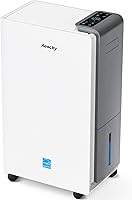
The Midea Cube has a daily moisture-removal capacity of 20 pints. Comparable daily collection figures aren't supplied for these ACs, so there is no sound basis for declaring which model collects the most water.
BTU measures cooling capacity, not daily water collection. Likewise, a large bucket means fewer emptying trips, not faster moisture removal.
Room conditions also affect collection. A machine will usually collect less water as the room gets drier, so a slowing bucket fill doesn't automatically mean it has stopped working.
For a moisture problem that lasts beyond summer, our guide to how to choose a dehumidifier explains capacity, appliance type and drainage.
Dehumidifier vs air conditioner: does drier air feel cooler?
Drier air can feel less sticky, but a dehumidifier doesn't lower the room's temperature. Its heat output can make an already hot room less comfortable.
If you want a lower temperature, buy cooling. If the temperature feels right but fabrics feel damp or humidity stays high, target moisture instead.
How can you tell whether heat or humidity is the problem?
Measure temperature and relative humidity together before buying. A small room hygrometer helps separate a moisture problem from discomfort caused mainly by heat.
Place it away from direct sunlight, an appliance outlet, an exterior door or a steamy bathroom. Check readings at several times of day, including when the room feels worst.
A common indoor humidity target is about 30%–50%, adjusted for comfort and condensation. Sustained readings above 60% point toward a moisture problem, even when the room doesn't feel especially warm.
Relative humidity can rise as air cools, so compare readings alongside temperature. A cooler evening reading doesn't necessarily mean more water has entered the room.
For a basement, use our guide to a good basement humidity level to choose a practical target.
Look for moisture sources too: plumbing leaks, rain entry, wet laundry and poorly vented showers can keep feeding the problem. Fixing those sources reduces the work any appliance must do.
Is a portable AC's dehumidifier mode enough?
An AC's dry mode can be enough for occasional dampness, especially if you already need cooling. Persistent humidity during mild weather is a stronger reason to choose a separate dehumidifier.
Both portable ACs here offer cooling, dehumidification and fan modes. Dry mode changes how the appliance operates, but it doesn't make every AC equivalent to a dedicated humidity-control unit.
Follow the model's instructions for drainage and exhaust arrangements in each mode. Don't assume the cooling setup also applies unchanged to dry mode.
A useful check is what happens after the room reaches a comfortable temperature. If humidity stays high or climbs again while cooling is off, temperature control alone isn't solving the moisture problem.
Avoid lowering the thermostat repeatedly just to chase dampness. You can end up with a cold room that still feels clammy.
Fan mode doesn't remove moisture by itself. It moves air, which may improve comfort, but it doesn't collect water.
If dampness is the only issue, our best dehumidifiers for home guide is a better starting point than buying an AC for its extra mode.
Which appliance suits a basement, bedroom or living room?
Choose by conditions in the room, not the room's name. Basements can need cooling, and bedrooms can need moisture control without lower temperatures.
A cool basement with persistent dampness
A dedicated dehumidifier is the better fit when the basement is comfortable in temperature but has high humidity. Continuous drainage is especially useful where moisture control is needed regularly.
Skip a portable AC if you don't need cooling or lack a suitable exhaust opening. Cooling an already cool basement can add discomfort without addressing humidity on its own schedule.
Our article on whether dehumidifiers help with mold explains moisture control's role. Drying the air doesn't remove existing mold or repair water entry.
A hot bedroom or home office
An AC is the better first choice when heat makes the room uncomfortable. Keep the door closed during cooling so the appliance isn't trying to condition adjacent rooms too.
Consider where you'll put the machine before buying. A usable window, clear walking space and access for filter cleaning matter as much as the floor area.
Don't choose either appliance on the assumption that it will be quiet enough for sleep. Compressor and fan sound can matter more beside a bed than across a living room.
A warm, humid living room
Start with cooling if the room is both hot and sticky. Recheck humidity once the temperature is comfortable before deciding whether you need another appliance.
Open stairways and doorways can connect the living room to much more air than its measured floor area suggests. Close off the cooling zone where practical rather than expecting a room appliance to condition the whole home.
How should you compare size and capacity?
Compare cooling with cooling and moisture removal with moisture removal. A dehumidifier's square-foot claim and an AC's square-foot claim describe different jobs.
Midea claims coverage up to 1,500 sq ft for the Cube. That isn't cooling coverage, and the right moisture-removal capacity still depends on dampness, room temperature and air moving in from other spaces.
BLACK+DECKER specifies its AC for rooms up to 450 sq ft, while Midea specifies its portable AC for up to 300 sq ft. Treat those figures as starting points, with sun exposure, ceiling height and insulation affecting the fit.
Both ACs carry a 10,000 BTU ASHRAE figure, but that shared number doesn't make them interchangeable. Midea also supplies a 7,100 BTU SACC figure, while BLACK+DECKER's headline specification gives 5,550 BTU DOE.
When comparing portable ACs, use the same capacity standard where possible. Don't compare one model's ASHRAE number with another model's SACC or DOE number as though they use the same basis.
Avoid buying a much larger cooling unit solely to remove more moisture. Cooling too quickly can shorten the time available for moisture removal, and lower temperature alone doesn't guarantee the humidity you want.
What does installation involve?
A dehumidifier needs airflow and a water-handling plan; these portable ACs also need a window exhaust route for cooling. Confirm the full setup before ordering.
Place a dehumidifier where air can reach it
Keep intake and outlet openings clear, with the clearance required by the manual. Don't squeeze the appliance behind furniture or aim its outlet into a nearby wall.
Close exterior windows and doors while it runs. Otherwise, incoming humid air can keep replacing the moisture you remove.
The Cube's removable bucket holds 3.2 gallons. Leave enough access to lift it out, and empty it before it becomes too heavy for you to carry safely.
For gravity drainage, the hose needs a clear downhill route to a suitable drain. Avoid kinks, uphill loops and a hose end sitting underwater.
Don't assume that having a drain hose means water can travel uphill. Check the connection and watch the first drainage cycle for leaks before relying on it.
Fit the portable AC exhaust correctly
Seal the window kit around the opening so hot outdoor air doesn't flow back inside. Keep the exhaust hose as short and straight as the instructions allow, without crushing it behind furniture.
Midea includes a 5 ft hose and adjustable window brackets for openings from 26.5 to 48 inches. BLACK+DECKER includes a kit for a double-hung or sliding-window setup; confirm compatibility with your window style.
Leave room for the hose bend and access to the window. The machine's floor footprint alone doesn't describe how much usable space the installed setup needs.
Casters help with repositioning, but moving an AC to another room also means reconnecting its exhaust. Plan separate water drainage when the selected operating mode requires it.
How do you use and care for either appliance?
Use a sensible target and clean airflow paths to keep either appliance working effectively. Maximum output isn't a setting you need all the time.
For humidity control, start around 45%–50% and adjust based on readings and condensation. Trying to make the room as dry as possible adds run time without a clear comfort benefit.
For cooling, choose a comfortable temperature rather than the lowest available setting. Shade sunny windows and reduce avoidable heat from appliances before asking the AC to do more work.
Clean filters as directed, and let washable filters dry before reinstalling them. Midea recommends cleaning its portable AC's filter every week of operation.
Empty and clean water containers regularly so slime and debris don't build up. Our dehumidifier cleaning guide covers the bucket, filter and coil-care steps.
Check drain hoses for blockages and inspect window seals after moving an AC. A loose hose or leaking connection can undo an otherwise suitable setup.
Before seasonal storage, drain remaining water and let accessible wet parts dry according to the manual. Clean the filter so the appliance isn't stored with damp dirt inside.
For operating costs, compare actual power use and run time rather than assuming one category is always cheaper. Our guide to dehumidifier running costs explains how electricity rates and daily use affect the total.
Which of these products fits your room?
Choose the Cube for ongoing dampness, the BLACK+DECKER for a larger cooling zone, or the Midea AC for scheduled cooling in a smaller room. Start with the job, then choose the controls and water handling that fit your routine.
Midea Cube: for moisture control without extra cooling
The Cube suits a cool room where moisture needs attention across several seasons. Its adjustable humidity setting lets you target dampness instead of using room temperature as a proxy.
Wi-Fi, Alexa and Google Assistant support let you manage settings remotely. The lift-and-twist design also nests for storage when the room no longer needs drying.
Skip it if lowering temperature is the main goal. It adds warmth indoors, and a full bucket still requires lifting unless you arrange continuous drainage.
BLACK+DECKER: for cooling where you sit
The BLACK+DECKER suits a hot living room or bedroom with a compatible window. Its Follow Me remote acts as a temperature sensor, which is useful when your seat is away from the machine.
Place the remote near the area you want comfortable, away from direct sun or other heat sources. That gives its temperature-sensing function a more useful reference point.
Skip this category of appliance if you can't vent outdoors. A portable AC needs to move heat out of the room to provide useful cooling.
Midea portable AC: for cooling around a schedule
The Midea AC suits a smaller bedroom or office where you want app schedules, remote control or voice commands. Its 24-hour timer gives you another way to match operation to when the room is occupied.
Scheduling is useful when your routine is predictable, but it doesn't replace choosing a suitable cooling capacity. Check the window fit before choosing it for the smart controls.
Skip it for a large open living area beyond its room guidance. Also skip it if the space is already cool and needs humidity control alone.
Dehumidifier vs air conditioner: how do you decide?
Use temperature to decide whether you need cooling, then use humidity readings to decide whether moisture needs separate attention. That sequence helps you avoid buying two appliances before knowing what one can solve.
- Comfortable temperature, high humidity: choose a dehumidifier and fix moisture sources.
- High temperature, comfortable humidity: choose an AC sized for the room.
- High temperature and high humidity: start with AC, then check humidity once the room is comfortable.
- Dampness during mild weather: consider dedicated dehumidification even if you already have AC.
- Leaks or standing water: address the water source before expecting either appliance to keep up.
If you need both appliances, remember that the dehumidifier releases heat that the AC may then need to remove. Use separate moisture control to meet a measured need, rather than running both at maximum settings by default.
The practical dehumidifier vs air conditioner choice comes down to drying without cooling or cooling with moisture removal. Before buying a dedicated unit, use our dehumidifier sizing and room guide to match capacity to the space.
If your readings show the air is too dry instead, read dehumidifier vs humidifier before choosing an appliance.
Frequently asked questions
Does a dehumidifier dry air better than an air conditioner?
A dehumidifier is the better choice for ongoing humidity control when the room doesn't need cooling. An AC removes moisture while cooling, but it may stop before humidity reaches your target.
Daily water-removal figures aren't supplied for these ACs, so their collection capacity can't be ranked against the Cube.
Can an air conditioner work as a dehumidifier?
Yes, an air conditioner removes moisture as air passes over its cold coil, and both portable ACs here also have a separate dehumidification mode. Check the instructions for drainage and hose placement in that mode.
A fan-only setting circulates air but doesn't actively remove water from it.
Which should I use in a basement?
Use a dehumidifier in a damp basement that is already cool enough, and choose an AC when the basement also needs cooling. Check for leaks or water entry first, then measure temperature and humidity.
An appliance can manage airborne moisture, but it won't repair the source of incoming water.
Will a dehumidifier cool a room?
No, a dehumidifier doesn't lower room temperature like an air conditioner and normally releases warmer air into the room. Lower humidity can make the space feel less sticky, but that isn't cooling.
Choose an AC if the temperature itself is uncomfortable, especially in a small room that already feels hot.
Should I buy one appliance or both?
Start with the appliance that solves the main problem, then measure what remains. Use an AC for heat and check humidity after the room reaches a comfortable temperature.
Add a dehumidifier if dampness persists, especially during mild weather when cooling isn't needed, rather than buying both before checking the room.