6 Best Dehumidifiers for RVs (October 2026)
The best dehumidifiers for RVs include the BEDRED 95 oz Dehumidifier for fewer tank checks, the TABYIK 35 oz Bedroom Dehumidifier for moving between spaces, and the avylo 42 oz Small Dehumidifier for compact camper bedrooms.
On this page (10 sections)
- How we chose the best dehumidifier for RV use
- Which RV dehumidifier suits your space and routine?
- How much drying capacity does your RV actually need?
- What should you measure before buying an RV dehumidifier?
- How should you set up a dehumidifier in a parked RV?
- How much RV power will a small dehumidifier use?
- Will these dehumidifiers work in a cold RV?
- Which mistakes keep an RV damp despite a dehumidifier?
- How do you care for an RV dehumidifier?
- Which dehumidifier should you choose for your RV?
The BEDRED 95 oz Dehumidifier is the best dehumidifier for RV owners here who want a large tank and sleep mode for light, localized dampness. Choose TABYIK if you'll move the unit often, or avylo 70 oz if shorter timed runs matter more.
These are compact picks for small spaces, not an automatic answer to heavy condensation throughout a motorhome. Before buying, decide whether you're drying a sleeping corner or trying to keep pace with showers, cooking and several people.
For more options near a bed, see our best dehumidifiers for bedrooms guide. If nighttime sound drives your choice, compare our quiet dehumidifier picks.
Our picks at a glance
-
1

-
2

-
3

- 4
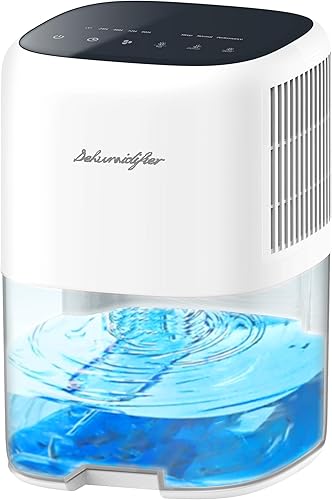 Best for weekend camper routinesCheck it
- 5
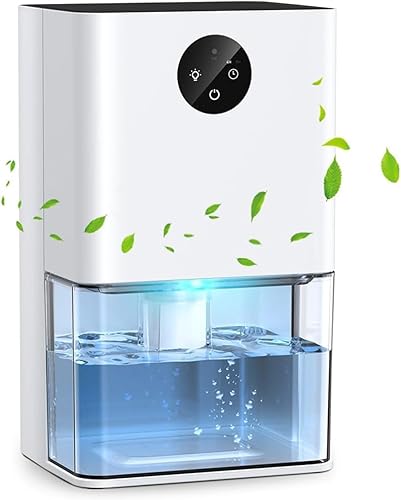 Check it
Deyagoo 50 oz Small-Space Dehumidifier
Best for narrow camper counters - 6
 Check it
avylo 70 oz Anti-Frost Dehumidifier
Best for shorter drying sessions
How we chose the best dehumidifier for RV use
Fit, usable water storage and practical controls guided this comparison. We compared dimensions, tank access, portability, shutoff, defrost and available power information, with extra weight on features useful in a parked camper.
BEDRED leads for storage and sleep mode, rather than a proven advantage in daily drying. A tank tells you how much water a unit holds; a removal rate tells you how much it can collect under stated conditions.
Coverage claims are less useful in an RV because partitions, cold windows and moisture from daily activities change the workload. A small floor area can still have a large moisture problem.
The comparison table helps narrow the physical fit. The write-ups explain which tradeoffs matter once you've found a safe place to put the appliance.
| Product | Best for | Tank | Dimensions | Controls | Our score |
|---|---|---|---|---|---|
| BEDRED 95 oz Dehumidifier | fewer tank checks | 95 fl oz | 6.7 x 8.7 x 14.6 in | Auto shutoff, sleep mode, 7-color light | 9.0 |
| TABYIK 35 oz Bedroom Dehumidifier | moving between spaces | 35 oz | 5.9 x 5.9 x 10.1 in | Auto shutoff, 7-color light | 8.0 |
| avylo 42 oz Small Dehumidifier | compact camper bedrooms | 42 oz | 5.6 x 6.37 x 11 in | Auto shutoff, auto defrost, 7-color light | 7.9 |
| Newo 44 oz Quiet Dehumidifier | weekend camper routines | 44 oz | 6.56 x 4.94 x 9.29 in | 24/48/72/96-hour timer, continuous operation | 7.6 |
| Deyagoo 50 oz Small-Space Dehumidifier | narrow camper counters | 50 fl oz | 5.91 x 4.72 x 9.84 in | Automatic mode, auto shutoff | 7.4 |
| avylo 70 oz Anti-Frost Dehumidifier | shorter drying sessions | 70 oz | 9.5 x 11.9 x 5.5 in | 3 modes, 0/6/12/24-hour timer, auto shutoff | 7.3 |
Which RV dehumidifier suits your space and routine?
Choose by your main constraint: tank checks, carrying, available space or timer control. Each model below has a useful role, but persistent whole-RV dampness calls for a different level of drying capacity.
BEDRED 95 oz Dehumidifier
- 95 oz water tank
- Auto shutoff when full
- Sleep mode
- Thermoelectric cooling
Choose BEDRED when water storage and a dark sleep setting matter most. Its tall body needs an open spot with room to remove the tank.
Pros
- Largest tank among these picks
- Sleep mode turns off lights
- Automatic shutoff
Cons
- One speed
- Tallest unit among these picks
- Daily moisture-removal rate unspecified
BEDRED: best RV dehumidifier for fewer tank checks
BEDRED suits a camper owner who can spare a taller spot and wants more water storage between checks. Its 95 oz tank is the largest here, with automatic shutoff when full.
Sleep mode turns off the ambient lights and reduces noise, making this a sensible choice near a sleeping area. The separate appeal of the colored lighting is less important than being able to darken the unit at night.
Allow for its 14.6 in height, plus the clearance required for airflow and tank access. Measure beneath cabinets before choosing it for a counter.
Skip BEDRED if you need timed sessions or want to compare a stated daily collection rate before buying. Its one-speed thermoelectric design is a simple choice for targeted use, but the large tank should not drive a decision about heavy moisture removal.
Start with it near the problem area, then watch the humidity trend. A slowly filling tank is only useful if the surrounding air is also getting drier.
TABYIK 35 oz Bedroom Dehumidifier
- 35 oz tank
- Built-in handle
- Auto shutoff
- 28 dB claimed operation
TABYIK suits light moisture control in a small, warm RV space. Its handle makes moving it easy, but its small usable tank calls for regular checks.
Pros
- Built-in handle
- Weighs 2.2 lb
- Separate light control
Cons
- Smallest tank among these picks
- Shuts off at 700 to 800 ml
- Recommended minimum operating temperature is 59°F
TABYIK: for moving between small spaces
TABYIK suits someone who wants to move one small appliance between an RV bedroom and another damp area. It weighs 2.2 lb, has a rear handle and occupies a nearly square footprint.
Its smallest-in-group tank is the main compromise. Shutoff occurs at 700 to 800 ml, so plan around that usable amount rather than the full tank volume.
TABYIK claims collection of up to 450 ml per day at 86°F and 80% relative humidity in a closed small room. Expect less collection when the air is cooler or already drier.
The recommended operating conditions are 59°F to 104°F and humidity above 45% RH. That makes this a better match for a warm occupied camper than cold storage.
Choose it for portability and modest moisture control, especially when you can check it regularly. Skip it if you want long gaps between tank checks or your RV often falls below its recommended temperature range.
avylo 42 oz Small Dehumidifier
- 42 oz transparent tank
- Auto shutoff
- Auto defrost
- Built-in handle
This avylo pairs a small footprint with a handle, visible tank and automatic defrost. It suits targeted moisture control where a larger appliance would crowd the room.
Pros
- Transparent removable tank
- Built-in handle
- Automatic defrost
Cons
- Limited daily collection for heavy dampness
- Auto defrost does not establish a minimum operating temperature
avylo 42 oz: for a compact sleeping area
The avylo 42 oz model suits a small camper bedroom where you want a handle and automatic defrost without giving up much space. The transparent tank also makes a quick water-level check easy.
Its body measures 5.6 x 6.37 x 11 in and weighs 2.6 lb. Leave enough room to lift or move it without catching nearby curtains, cords or bedding.
avylo claims up to 450 ml of daily collection at 86°F and 80% RH. This places it in the light-duty role of handling a small area's moisture, rather than clearing a large shower load quickly.
Before first use, check that the float is down at the bottom of its channel, as avylo directs. A float that cannot move freely can interfere with the tank's shutoff system.
Choose this model if portability, visible water storage and defrost are your priorities. Skip it for cold-weather storage unless the permitted operating temperatures match the conditions inside your RV.
Newo 44 oz Quiet Dehumidifier
- 44 oz tank
- 4 timed settings plus continuous operation
- 3 modes
- Auto defrost
Newo suits buyers who want day-length timers and a choice of sleep, normal and performance modes. Its low body can help where shelf height is limited.
Pros
- Four timer settings plus continuous operation
- Three modes
- Automatic defrost
Cons
- Shortest timed run is 24 hours
- Daily moisture-removal rate unspecified
- Full tank can stop a timed run early
Newo: for day-length timers and mode choices
Newo suits a camper routine built around longer timed runs. It offers 24-, 48-, 72- and 96-hour settings, continuous operation, and sleep, normal and performance modes.
Those choices let you use one setting during the day and another near bedtime. A full tank still stops collection, so a multi-day timer does not mean several days without attention.
Its 9.29 in body height can help where a taller model would crowd an overhead cabinet. Airflow clearance still matters, even when the housing fits beneath a shelf.
Newo claims below 28 dB in sleep mode and includes adjustable light brightness. It also says the unit remembers the last timer, mode and lighting settings.
Pick Newo if you value control over the daily routine more than a large tank. Skip it if you need an automatic stop after a few hours, since its shortest timed setting is a full day.
Deyagoo 50 oz Small-Space Dehumidifier
- 50 oz transparent tank
- Auto shutoff
- 28 watts
- Compact dimensions
Deyagoo combines a narrow body with a visible tank and a stated power rating. It suits a small damp area where you can leave its top and rear air paths open.
Pros
- Transparent tank
- 28-watt power rating
- Tank groove helps with removal
Cons
- Limited daily collection for heavy dampness
- Needs clearance above and behind the body
Deyagoo: for a narrow counter and visible tank
Deyagoo suits a narrow camper counter where you can leave the top inlet and rear outlet open. Its transparent tank makes water collection easy to see without pulling the container out.
The body measures 5.91 x 4.72 x 9.84 in. Check the full working space, since pushing it against a wall to save room would block the rear air path.
Deyagoo claims up to 400 ml of collection per day at 86°F and 80% RH. That makes it a choice for light ongoing moisture rather than a quick response to soaked materials.
Its 28-watt rating gives you a useful starting point for power planning. The tank's bottom groove helps with removal, and shutoff occurs when collected water reaches 1,300 to 1,500 ml.
Choose it if the narrow body, visible water level and stated power draw fit your needs. Skip it if the only available spot is a tight cubby or you need several operating modes.
avylo 70 oz Anti-Frost Dehumidifier
- 70 oz removable tank
- Auto defrost
- 3 modes
- 6/12/24-hour timer with off setting
Choose this avylo for shorter timer options, a removable tank and controls that let you silence button beeps. Allow for its broad footprint before choosing a spot.
Pros
- Shorter timer options than Newo
- Keypad mute and light-off options
- Second-largest tank among these picks
Cons
- Largest depth-by-width footprint among these picks
- Sleep-mode noise claim is below 38 dB
- Confirm operating temperature limits for cold use
avylo 70 oz: for shorter timed sessions
The avylo 70 oz model suits owners who want 6-, 12- or 24-hour runs rather than Newo's longer intervals. A timer-off setting allows operation without a timed stop.
Its removable tank is the second largest here, and automatic shutoff stops collection when full. Sleep, normal and turbo modes offer different operating choices.
The controls also suit a shared sleeping space. You can turn the colored light off and mute the keypad beeps, while avylo claims sound below 38 dB in sleep mode.
Measure carefully before choosing a shelf or counter. At 9.5 x 11.9 in, its depth-by-width footprint is the largest in this group.
Choose it when shorter timers and quiet control inputs matter more than a narrow body. Skip it if counter space is scarce, and confirm the allowed operating temperatures before relying on its anti-frost features in a cold camper.
How much drying capacity does your RV actually need?
Match daily moisture removal to the dampness you have, then choose a tank that suits your emptying routine. Start with a humidity gauge so you can see whether the problem lasts all day or follows specific activities.
A useful starting target is roughly 40% to 50% relative humidity. Cold windows and wall surfaces can still collect condensation at that level, so watch both the gauge and the surfaces.
Separate water storage from moisture removal
A large bucket does not make an appliance dry faster. It simply gives collected water more room before you need to empty it.
For perspective, collecting 450 ml per day is less than half a liter under the stated warm, humid conditions. That can help with a small moisture load, but it is a modest amount beside repeated showers and wet gear.
Don't compare an ounce-based tank label directly with a pints-per-day removal figure. They describe different things, even when both use water-volume units.
Decide whether these compact picks are enough
A compact unit is a reasonable starting point for light dampness in one small area, especially after you reduce moisture at its source. It is a poor match for an RV with wet walls across several rooms.
If humidity stays high while the unit runs and the tank remains below shutoff, more storage will not solve the shortfall. Consider an appliance with greater daily removal capacity.
Our home dehumidifier size-and-room guide covers broader choices. Measure the available space before moving up to a larger appliance, since the extra drying capacity also needs room.
Treat closed rooms as separate spaces
A unit in the main living area cannot draw much air through a closed bedroom door. Open interior doors when practical, or place it in the room that needs attention most.
Cupboards, mattress undersides and packed storage spaces can stay damp even when the main cabin feels comfortable. Improve air movement around those areas rather than assuming a nearby appliance dries them all.
What should you measure before buying an RV dehumidifier?
Measure the working space, not just the appliance body. You need room for air to enter and leave, for the tank to slide out, and for your hand to reach the controls.
Use the dimensions in the comparison table to mark the footprint with paper or removable tape. Then check whether nearby doors and drawers still open.
Check tank access before committing to a location
Imagine removing a partly filled tank without tilting it over cushions or electronics. A spot that requires lifting the whole appliance every time will make routine emptying harder.
Also check the path to the sink or disposal point. A larger container is useful only if you can carry and empty it comfortably.
Leave space for air and normal RV use
Avoid tight cupboards, enclosed under-seat compartments and spots pressed against fabric. Follow the manual's clearance requirements rather than making the unit fit by covering a vent.
A stable floor position may work better than a crowded counter, provided it stays clear of foot traffic. Keep it away from direct shower spray and places where a door could strike it.
The dehumidifier size guide explains capacity and appliance types if you're still deciding between a compact model and a larger unit.
How should you set up a dehumidifier in a parked RV?
Start with a level surface, an empty tank and clear air paths. Then run the appliance according to its manual and watch how humidity changes under normal living conditions.
- Check the power requirements and use the supplied power equipment as directed.
- Seat the tank fully and check any float instructions before switching on.
- Place a humidity gauge away from the outlet, a cold window and direct cooking steam.
- Close exterior doors and windows during a drying period when outdoor air is humid.
- Check water collection and humidity at similar times over the next few days.
Place it near damp air without trapping it
Put the appliance in the affected room where air can reach it. A bedroom corner with open air around it is more useful than a concealed shelf behind bedding.
If you move it after a shower, keep it outside the direct splash area. Clear the bathroom's bulk moisture with suitable ventilation first, then use the dehumidifier for lingering dampness.
Plan for sleeping and travel
Before bed, empty the tank and select the light and sound settings you prefer. Sound claims from different brands do not provide a precise side-by-side comparison, so placement still matters.
Before driving, switch the unit off, disconnect it, empty the tank and secure the appliance. A full-tank shutoff does not keep stored water from spilling during a turn or sudden stop.
How much RV power will a small dehumidifier use?
Multiply watts by run time to estimate energy use, then account for the rest of your RV's electrical load. Small appliances still draw from the same limited supply as lighting, fans and other equipment.
At their stated ratings, Deyagoo's 28 watts equals about 0.67 kWh over 24 hours, while Newo's 30 watts equals 0.72 kWh. Those calculations assume a constant draw for the full period.
A timer ending, a full-tank shutoff or a different operating mode can change actual use. Low wattage is useful for power planning, but it does not show how much moisture an appliance removes per unit of energy.
For battery use, include inverter losses and your usable battery capacity. None of these picks should be assumed to connect directly to an RV battery; match the required supply to the appliance instructions.
Shore power makes longer run times easier to accommodate. If you're off-grid, reduce moisture from cooking, showers and wet clothes so the appliance has less work to do.
Will these dehumidifiers work in a cold RV?
Cold use depends on the model's permitted temperature range, even when it has automatic defrost. Defrost helps manage frost buildup; it does not turn a small dehumidifier into a freeze-proof storage appliance.
Thermoelectric units generally collect less water as air gets cooler and drier. A low collection level in those conditions may reflect a smaller available moisture load or reduced removal performance.
Check the cabin temperature where the appliance sits, especially overnight. A heated living area and an unheated storage compartment can present very different conditions.
Empty collected water before it can freeze, and follow the manual for storage. For seasonal planning, read our guide to using a dehumidifier in winter.
Which mistakes keep an RV damp despite a dehumidifier?
Leaving moisture sources untreated is the biggest mistake. A dehumidifier can remove water vapor from the air, but it cannot repair a roof leak or stop water entering around a window.
Running it beside an ongoing moisture source
Vent cooking and shower moisture outside using the RV's suitable exhaust system. Dry wet coats, towels and footwear outside the living space when conditions allow.
Ventilation is most helpful when replacement air is drier. Leaving a window open throughout humid weather can keep feeding moisture into the area you're trying to dry.
Using a timer as a humidity control
A timer measures hours, not dampness. It can stop the appliance while the air is still humid, and a full tank can stop it before the timer ends.
Check the humidity trend rather than assuming a scheduled run is enough. Changes in occupancy, weather and shower use can change the required run time.
Judging success only by water in the tank
Collected water confirms that moisture is being removed, but it does not show whether removal keeps pace with the room's needs. Watch the humidity gauge and recurring condensation too.
If collection stops unexpectedly, check the tank, float, air paths and operating conditions. Our guide to a dehumidifier not collecting water helps separate normal low collection from a problem.
How do you care for an RV dehumidifier?
Keep the tank clean and the air paths open so the unit can keep working as intended. Switch it off and unplug it before cleaning, following the model's instructions.
Empty the tank regularly rather than leaving water sitting through long periods of nonuse. Clean the container as directed, rinse it well and let it dry before storage.
Wipe dust from accessible intake and outlet surfaces. If the model has a user-serviceable filter, clean it on the schedule in its manual without wetting electrical parts.
Check that the tank seats correctly after cleaning and that the float moves freely. Never hold the float down or bypass a full-tank stop to extend operation.
Before packing the appliance away, empty and dry it, then secure its cord and tank. For a fuller care routine, see how to clean a dehumidifier.
Which dehumidifier should you choose for your RV?
Choose the best dehumidifier for your RV by the problem you need it to solve. A compact model makes sense for light dampness in a small area; steady whole-cabin condensation needs greater drying capacity and attention to moisture sources.
Pick BEDRED when fewer tank checks and a dark sleep setting lead your priorities. Choose TABYIK for frequent moving, or avylo 42 oz for a compact bedroom unit with a handle and defrost.
Choose Newo for day-length timers, Deyagoo for a narrow counter and visible water level, or avylo 70 oz for shorter timed sessions and muted controls.
Before ordering, settle the placement and power questions, then judge the result by your humidity trend. If you're unsure which appliance type fits the workload, use our guide to choosing a dehumidifier as the next step.
Our top 3 picks at a glance
-
1
-
2
-
3
Frequently asked questions
What size dehumidifier works in an RV?
Choose by daily moisture removal and available space, not tank volume alone. A compact unit can suit a small damp area, while steady condensation across several rooms may need a larger appliance.
Measure airflow clearance and tank access, then use a humidity gauge to judge whether the unit keeps up.
Can I run a dehumidifier in an RV while sleeping?
Yes, if the manual permits overnight use and you follow its power and placement instructions. Use a stable surface, clear the air paths and empty the tank before bed.
Choose light-off or sleep controls for a nearby unit, and keep cords away from bedding, wet areas and walkways.
How often will I need to empty an RV dehumidifier?
Check the tank daily at first, then adjust to the amount it collects. Humidity, temperature, run time and the shutoff level all affect emptying frequency.
A large tank gives more storage, but automatic shutoff pauses moisture removal when it fills.
Empty the tank and secure the appliance before travel.
Can a small dehumidifier remove all moisture from an RV?
A small dehumidifier can help with light dampness in a limited area, but it may not keep up with an occupied RV in wet weather. Fix leaks, vent cooking and shower moisture, and remove wet gear.
If humidity stays high despite those steps, choose greater daily moisture-removal capacity.
Does automatic defrost make a dehumidifier suitable for winter RV storage?
No, automatic defrost alone does not establish suitability for winter storage. The appliance must operate within its permitted temperature range, and stored water must not be allowed to freeze.
Check the manual for cold-weather limits and unattended operation, and arrange regular checks if you leave a unit running.


